Through being exposed to diverse streams of media during one’s youth, aesthetic sensibilities are established which eventually come to influence purchasing proclivities. As fate would have it, it was within my inaugural foray into the vast yet inviting realm of home console gaming that expectations regarding visual preferences were unequivocally solidified. While playing Kingdom Hearts, I grew captivated as an enigmatic spiky-haired man skulked Olympus pillars, a vibrant girl with a megawatt beam frolicked amidst the Destiny Island shores, and a woman no doubt spending a worrying amount on hair spray to maintain an impossibly tall fringe spoke about other worlds. Drawn into the annals of a legacy I could scarcely begin to imagine, with youthful anticipation I sought out the thousand-year odyssey that was Final Fantasy X and its oft-maligned yet quietly nuanced successor X-2.
Completion of both lead to hungrily thumbing through second-hand PlayStation titles clustered awkwardly towards the back of my local gaming store, which over a period of several months resulted in the successful acquisition of Final Fantasy VI, VII, and VIII. In various stages of ruin though they were – partially peeled stickers and scratches emblazoning covers – I relished the opportunity to experience more of what had taken my younger imagination captive.
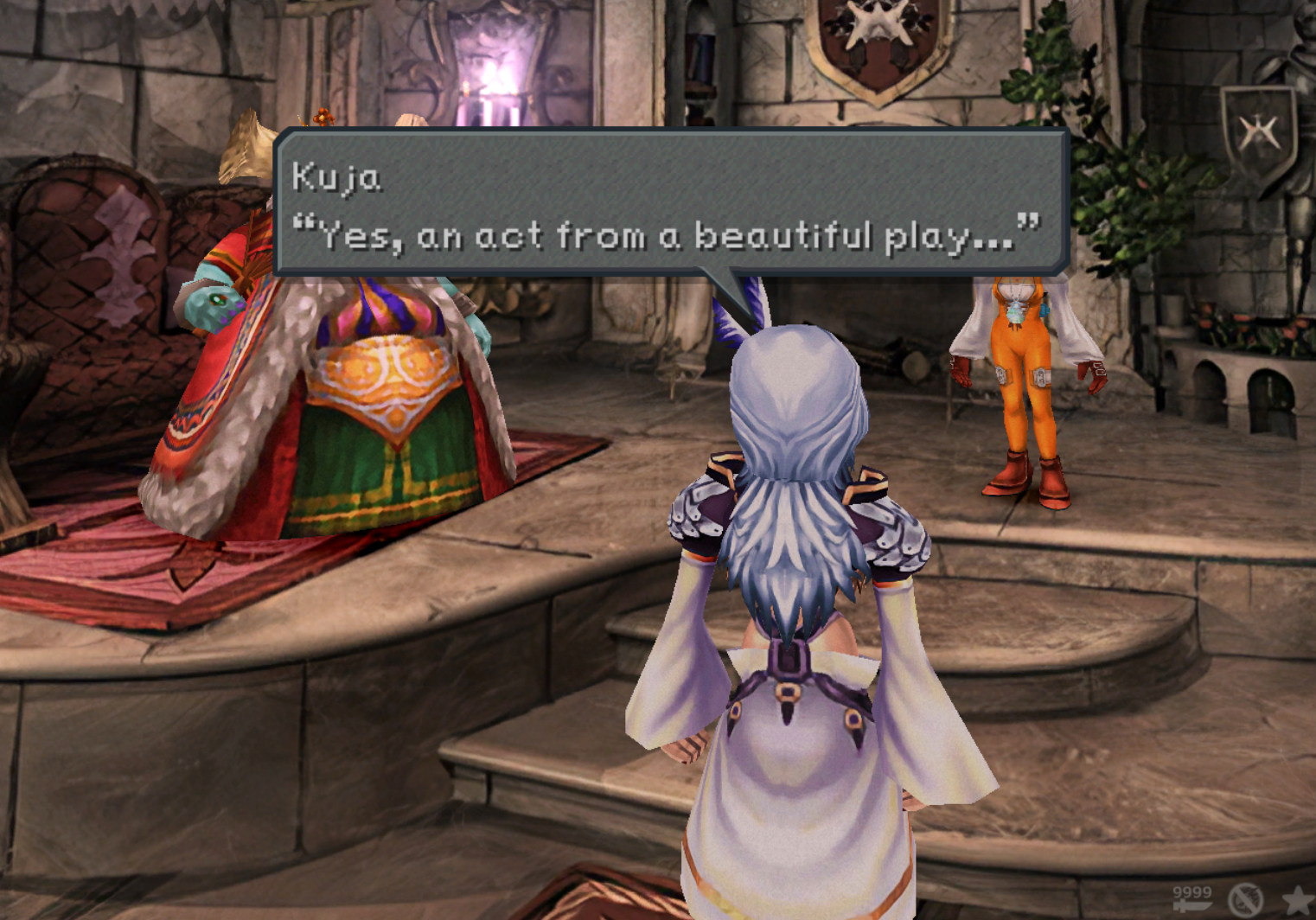
There came a day where I happened to stumble upon another entry within this much-revered, fantastical franchise. Imbued with palpable giddiness, I picked up Final Fantasy IX and observed its cover marred by a discreet crack. ‘No matter’, I thought (such occupational hazards were a common occurrence if one happened to frequently trawl second-hand gaming stations) and eagerly turned my attention towards the back – only to promptly experience profound disillusionment at the aura of childlike daintiness gracing character features; torsos curiously stubby, at odds with the matured – and from the youthful perspective of one skimming magazines aimed at Older Girls™ dreaming of when she would grow up, aspirational – physiques of ingénues strewn amidst Kingdom Hearts and Final Fantasy X. The aesthetic quality elicited instinctual repulsion, and with a grimace I relinquished IX to its former resting place without a trace of lingering hesitance. So certain was I that the game was aimed solely at children that I never considered going back for it.
Following this period, my ardour for gaming waxed and waned and I embarked on a self-imposed sabbatical which spanned a number of years. Such is the capricious vortex of hobbies swirling around one’s youth and the tempestuous dalliances therein – as soon as you are taken with one pursuit, another catches your all-too eager eye. Eventually I became enamoured with visual novels, a medium which encouraged narrative-driven inclinations which further bolstered a unique means of cultivating player interactivity despite the inherent heteronormativity attached. This too I came to abandon, purposefully casting aside to the dusty recesses of history.

At some point I turned my attention towards conventional modes of gaming once more through the purchasing of a PlayStation 4 for Persona 5, and Nintendo Switch for Fire Emblem: Three Houses half a year later. The COVID-19 pandemic brought with it a curious burst of interest in the critically acclaimed MMORPG Final Fantasy XIV with an expanded free trial which you can pl- (cough), which similarly pulled me in and gently tugged my hand back to where it all began. The rekindling of a dormant ember had begun to blaze with renewed intensity.
Over the past biennium, this blaze spurred me on towards embarking upon a most gratifying odyssey – traversing once more through the hallowed halls of the Final Fantasy canon by revisiting VII, X, X-2 and completing VIII (never quite got around to doing so, all those years ago, despite countless hours spent wandering, as if in a dreamlike stupor, around Balamb Garden). It was inevitable that my attention would turn towards IX – and mere hours in, those lofty, condemnatory reservations which coiled around my consciousness upon seeing the crack-marred case all those years ago faded into the ethereal mists of oblivion. In their stead, I found myself basking in the resplendent glow of a title which expertly interweaves past and future – both within the in-game confines, and the franchise as a whole.
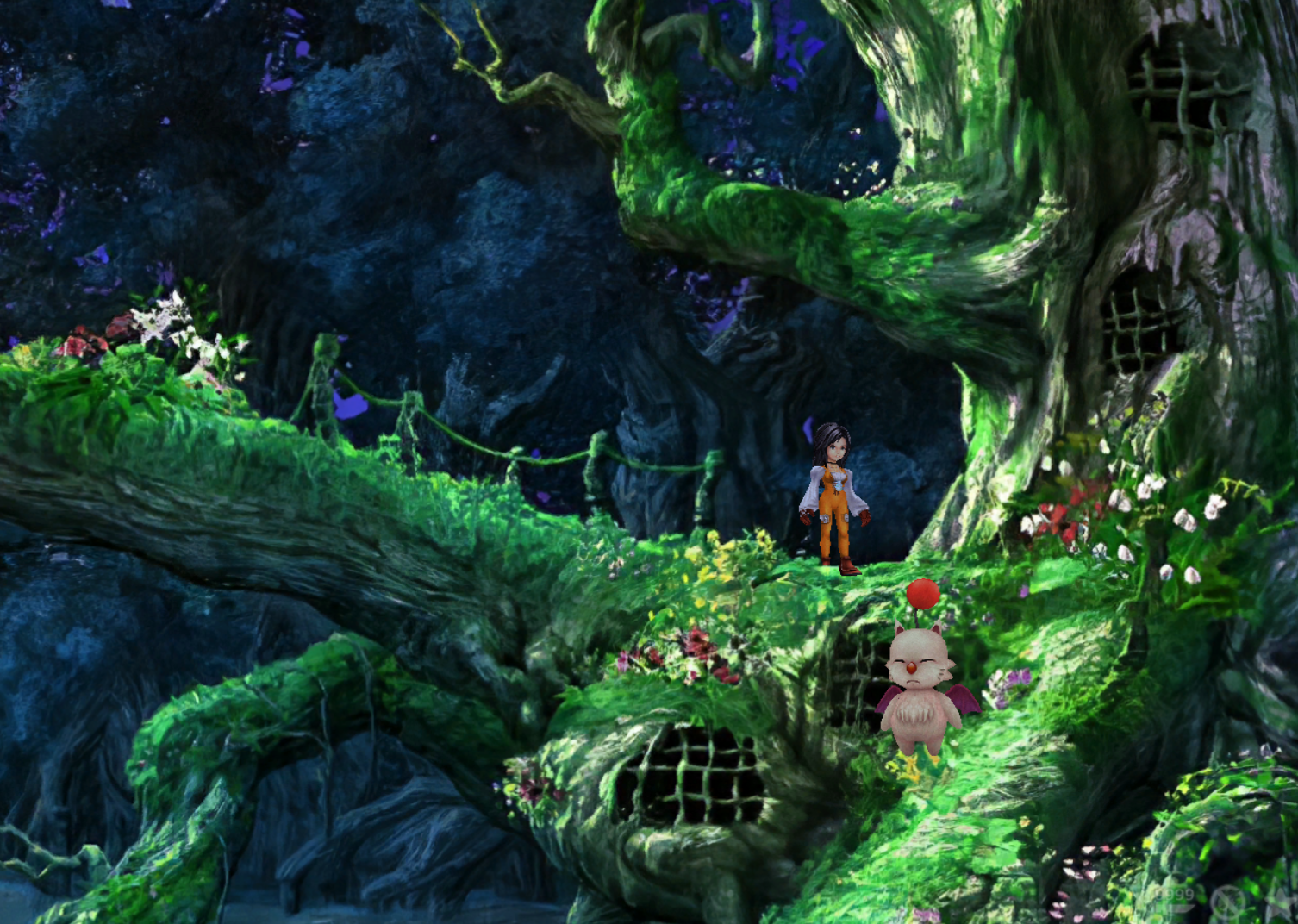
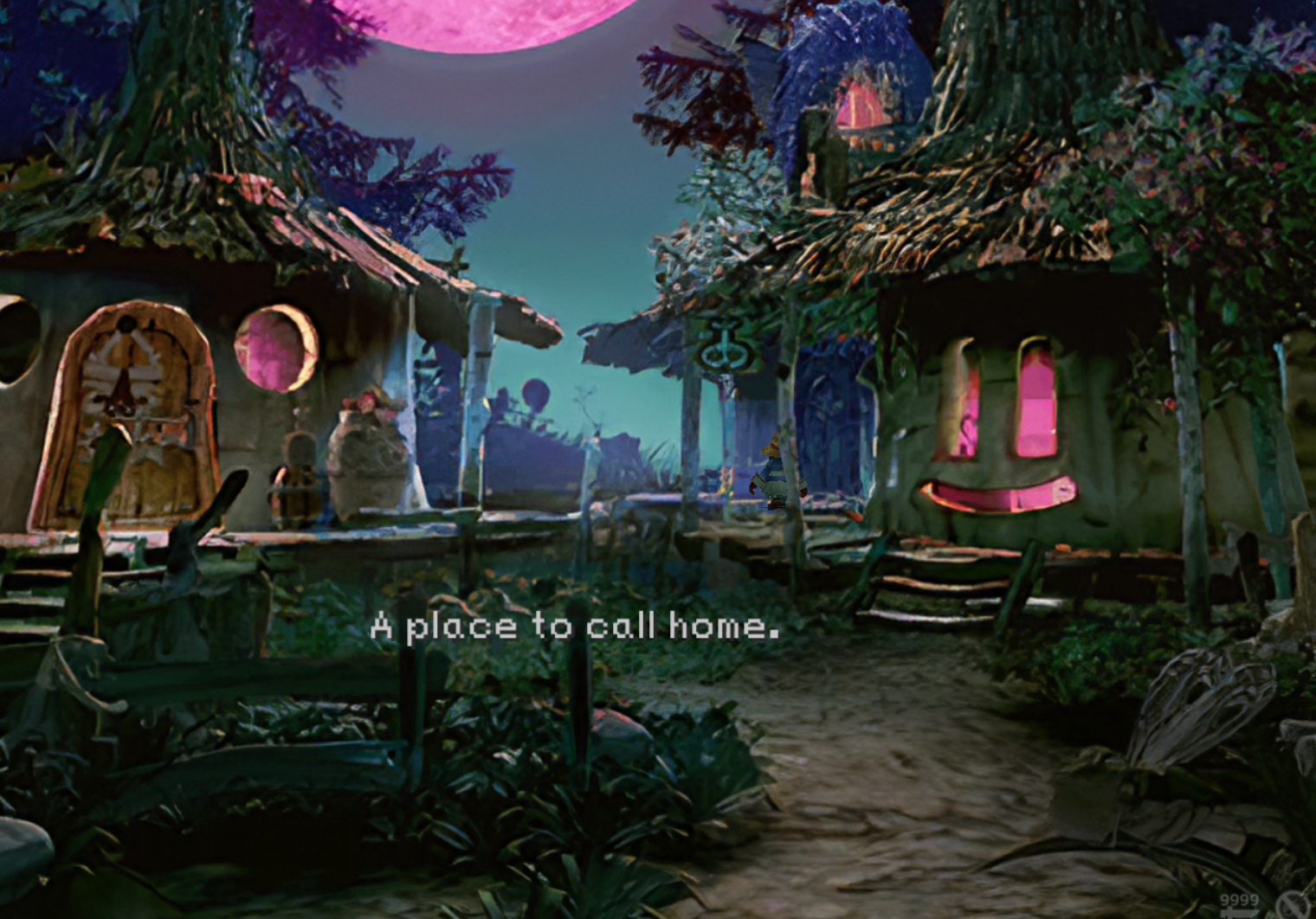
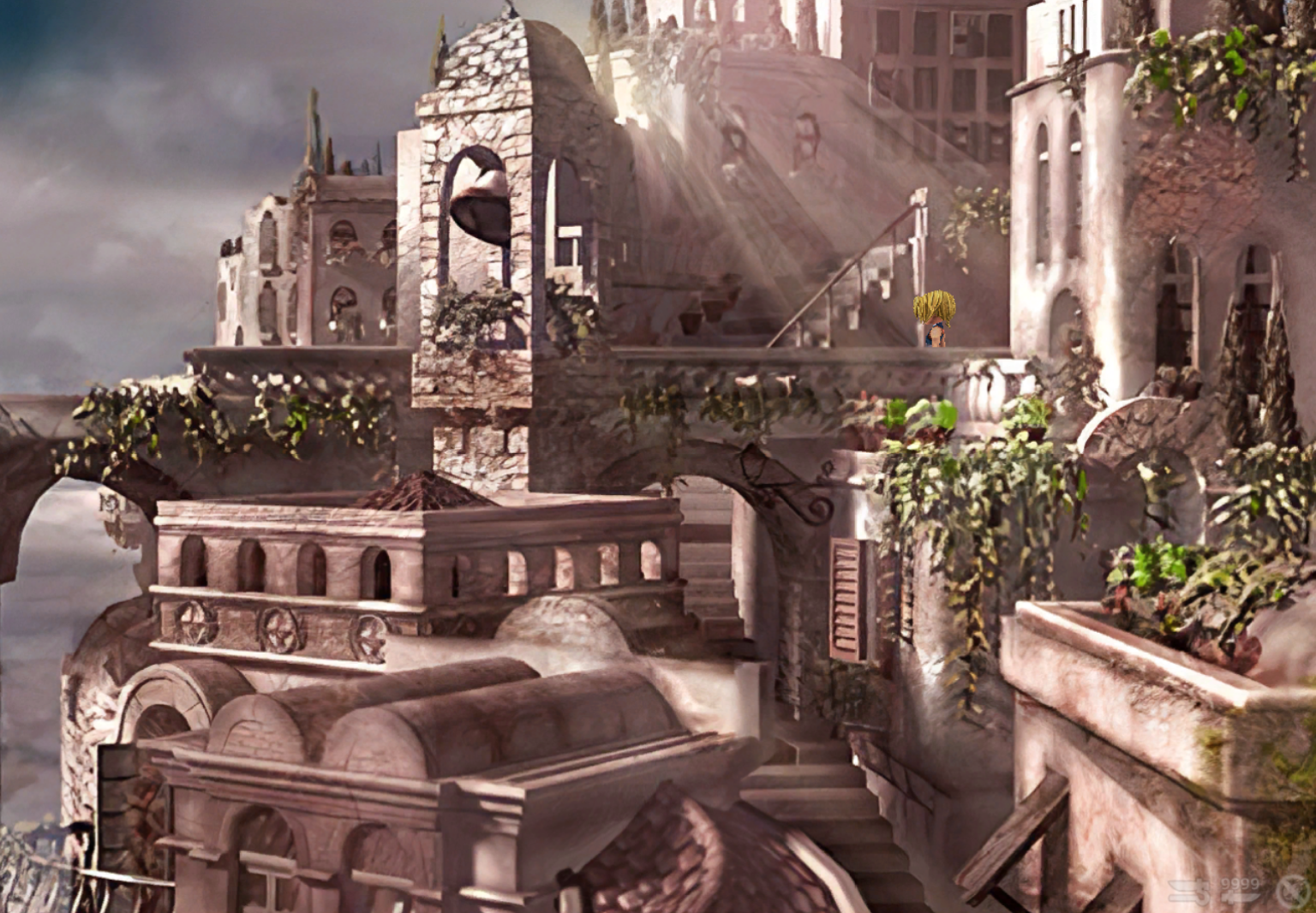
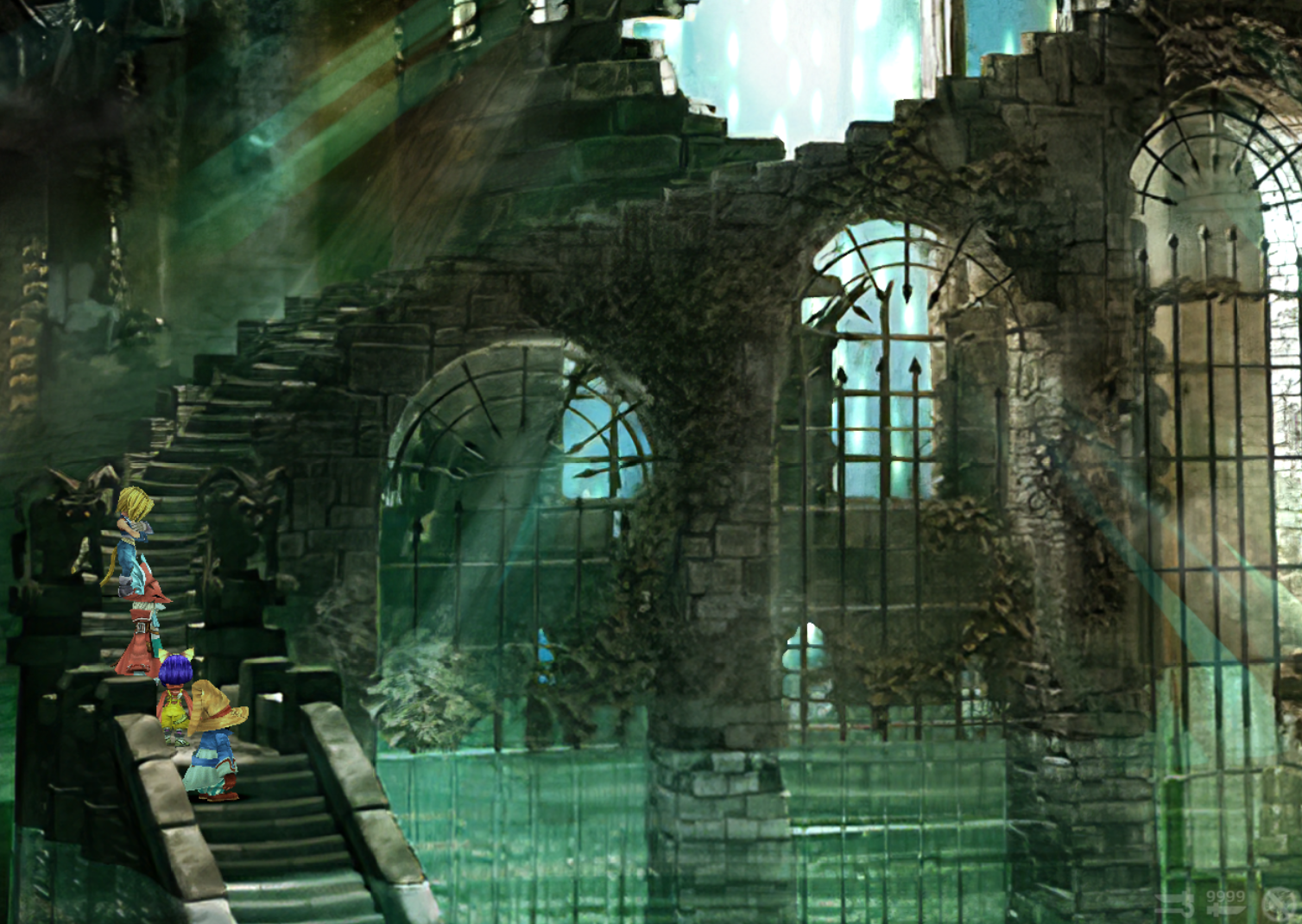
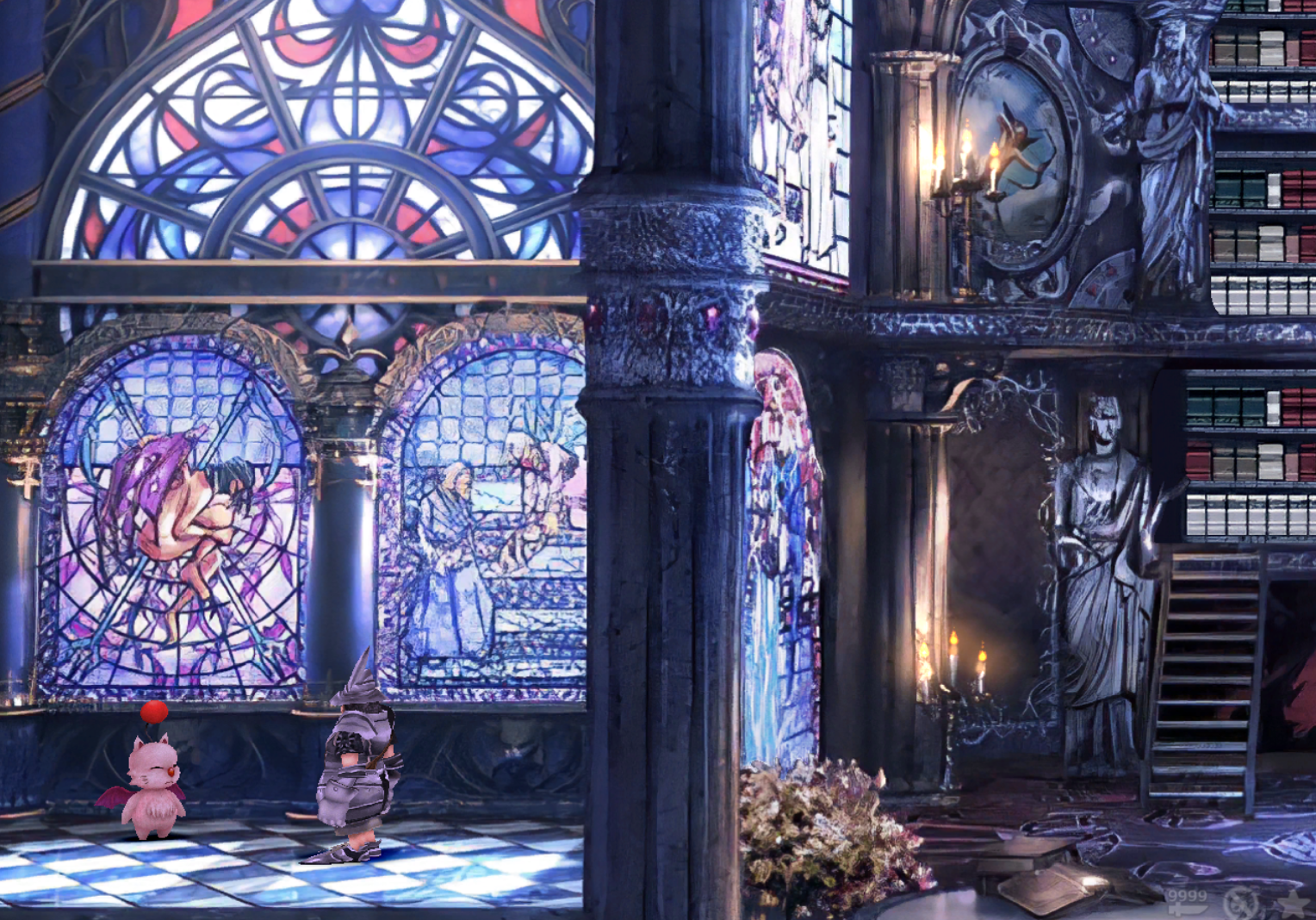
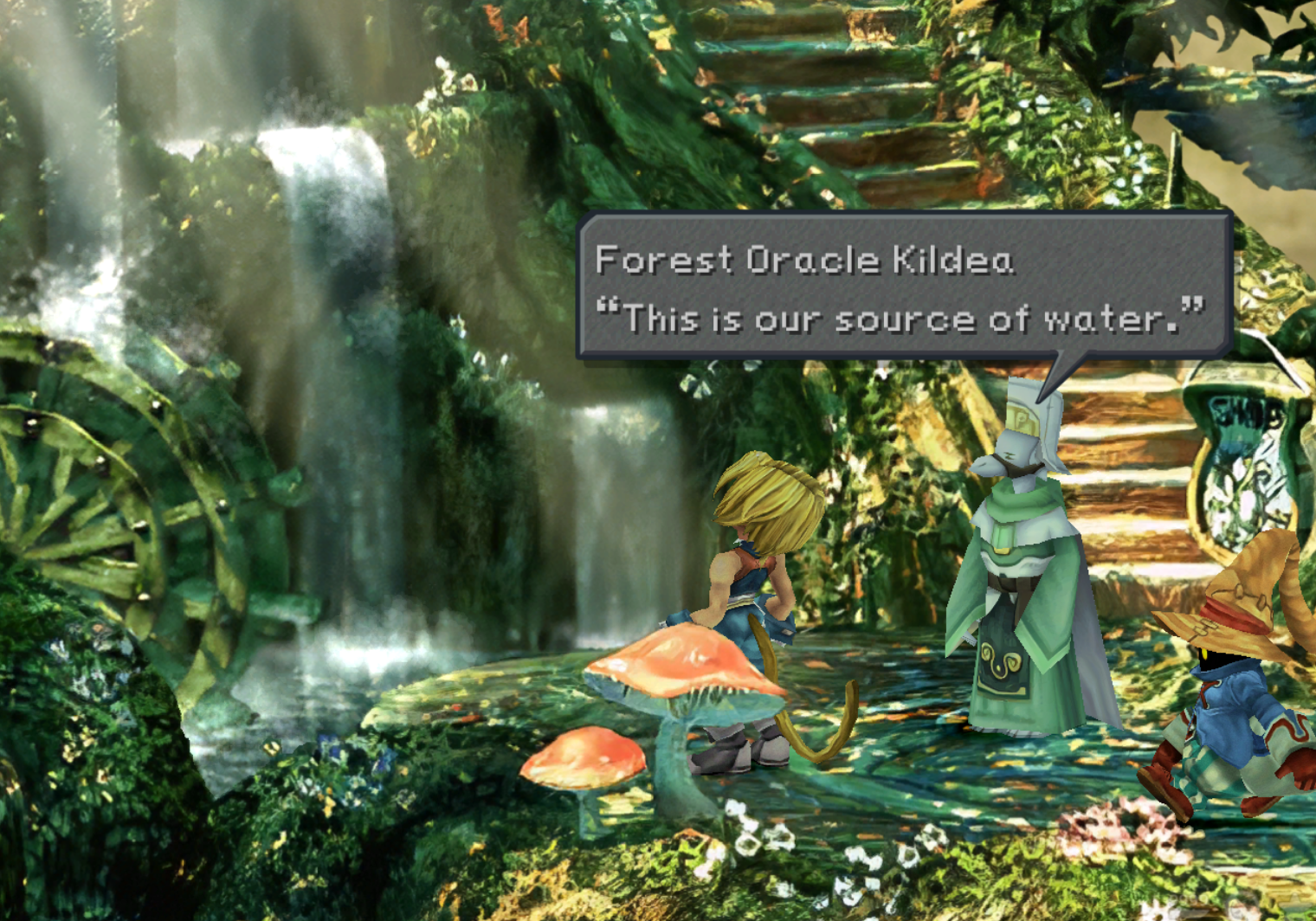
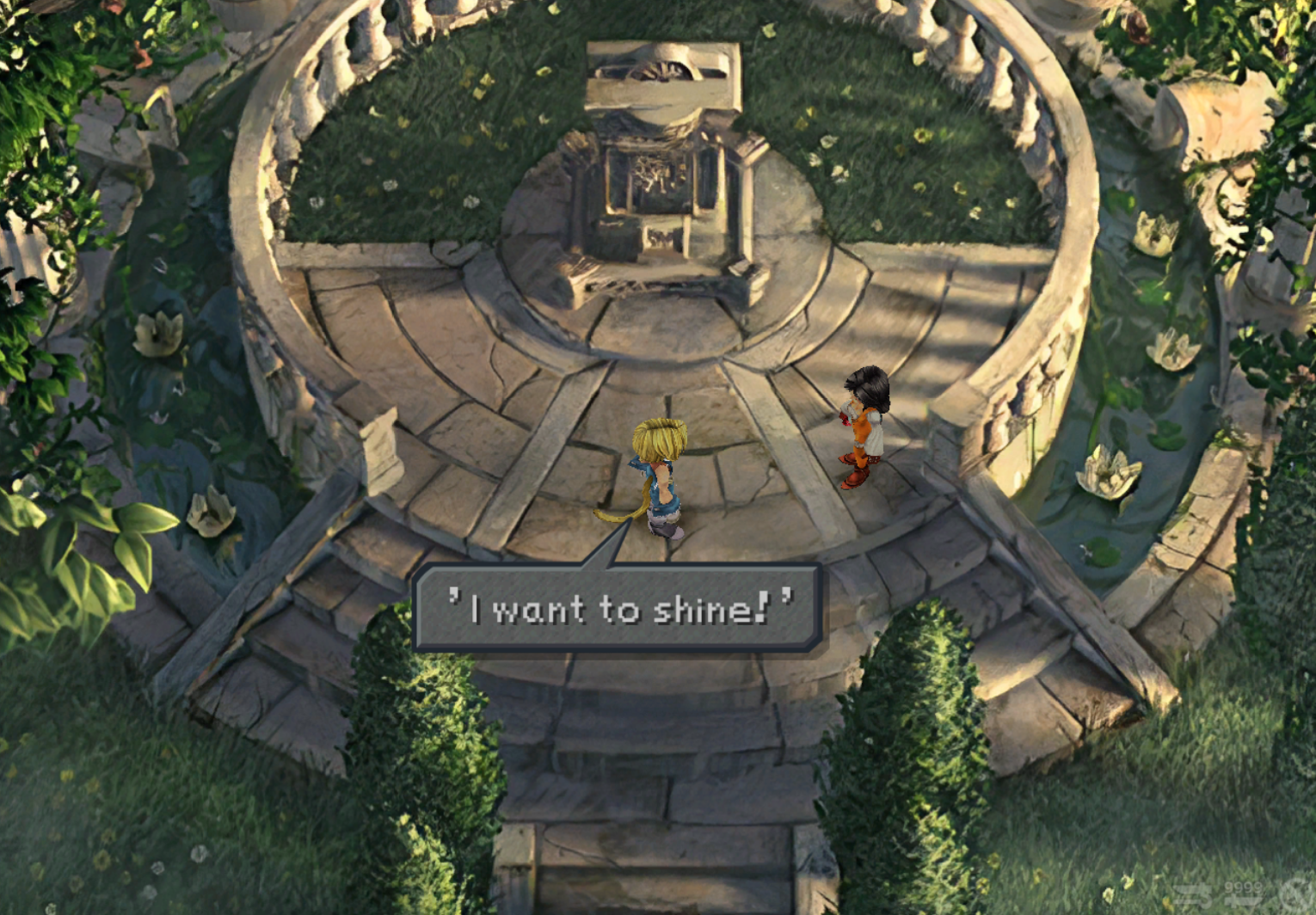
The character designs which I once reviled exude a sense of childlike wonder, anthropomorphic softness and technicolour hues uniquely juxtaposed against bleak thematic conceits encompassing morality, free will, and existentialism, casting a philosophical pallor over its fairytale landscape. Amongst the pantheon of Final Fantasy titles, IX emerges with confidence as a veritable pinnacle, aided by an aesthetic quality which is simply unmatched. Awe-inspiring backgrounds illustrate the world of Gaia, with higher resolution renderings enhanced through Moguri Mod making it not only the most visually impressive within the series I’ve seen, but one of the more beautiful games I have had the fortune to witness.
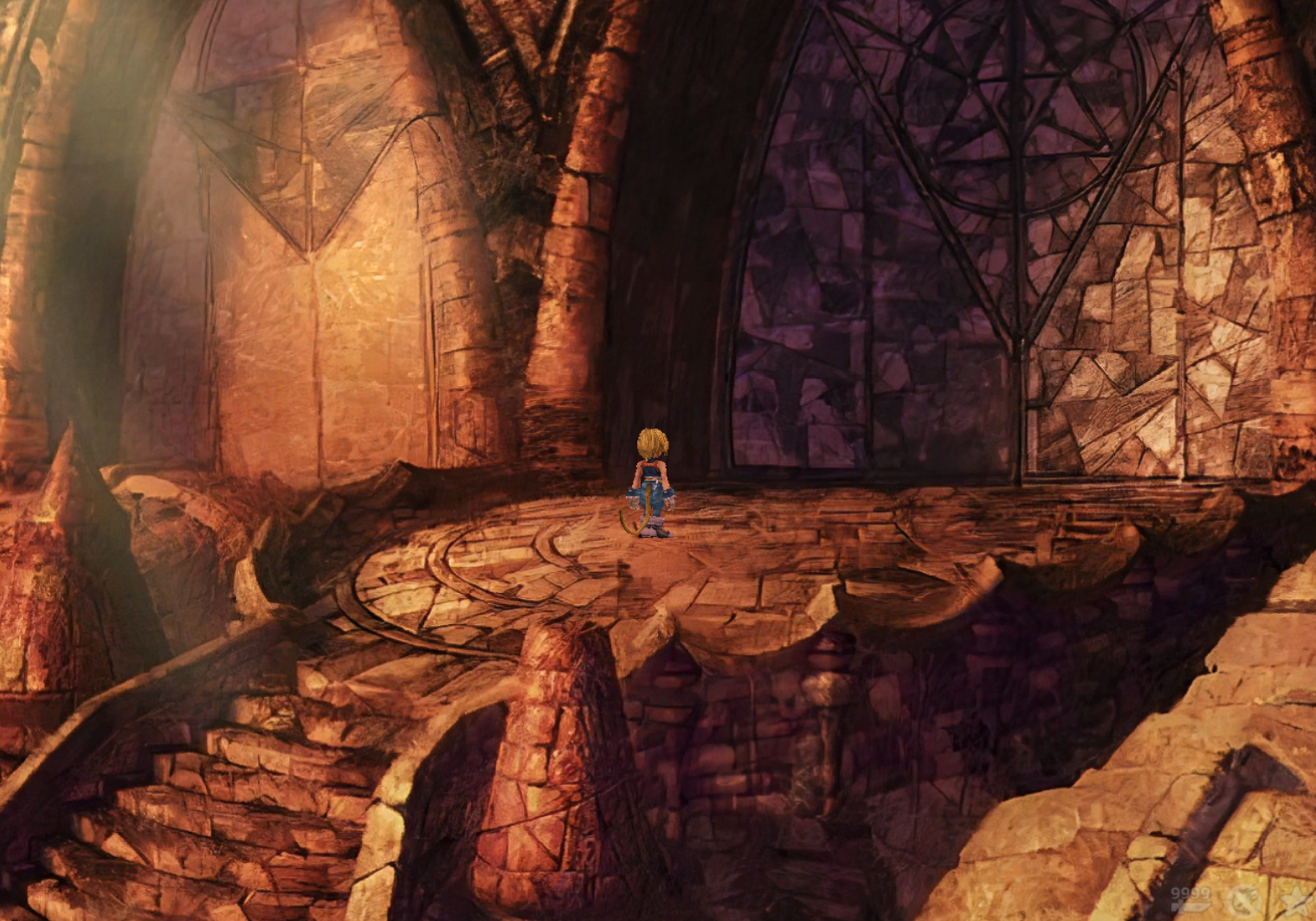
As if one were traversing the well-worn pages of a beloved fairy tale, a dreamlike quality suffuses the narrative. Imbued with a distinctly ethereal quality, this indescribable sensation is in turn bolstered by richly Shakespearean connotations (e.g. allusions to Twelfth Night, King Lear, A Midsummer Night’s Dream, Romeo and Juliet appear) and metatheatrical presentation. All of this is brewed within a cultural melting pot drawing on a rich tapestry of epochs which proved inspirational, and in true melodrama fashion seamlessly blends asides submerged in elements of comic relief with heart-rending character journeys constructing a magnificently dramaturgical experience.
As the advent of dystopian futurism and science fiction motifs emerged, VII and VIII ushered in a paradigm shift embodied by the emergence of towering citadels and advanced technology. Within this transformative landscape, grandeur conjured forth by soaring turrets and bibbidi–bobbidi-boo’s of magic faded into a distant past as the franchise split in twain. Serving as the swan song of producer Sakaguchi Hironobu and in numerous regards, a nostalgic yearning for this bygone era, he called IX the “closest to (his) ideal view of what Final Fantasy should be”. Trusting the game as the crowning achievement of all that the franchise sought to embody, it stands as a testament to a lived history even for those who have yet to experience those earlier titles which, may appear quaint to modern eyes yet nevertheless proved revolutionary. It’s a work which confidently stands at the fraught intersection between past and present, refusing to cast aside all that came before it and instead pays tribute to them. IX itself becomes the personification of a legacy, of hopes, and dreams.