Deliberately shaped within the kaleidoscopic and expansive realm of anidol properties, songs which navigate matters of the heart tend to be firmly entrenched within the rigid paradigms of heteronormative constructs. Employing a distinctly feminine perspective, with precision such pieces methodically express admiration for the assumed male recipient.
Consequently, this cultivates an ardent incentive for them to participate in the acquisition of character-centric merchandise and engagement in popularity polls, mirroring infamous practices propagated by the likes of AKB48. This approach constitutes the foundational framework upon which the construction of the anidol industrial complex is built upon, further amplified by a pronounced one-sided affection towards the player-as-proxy – the Producer – prevalent in isolated SSR-based contexts.
While I once held
Cinderella Girls in high regard as one of my preferred branches within
The Idolmaster franchise, it can be considered among the more egregious transgressors within this heteronormative stratagem. An implicit understanding prevails, with minimal deviation, that the female characters therein harbour romantic inclinations towards the player-cum-Producer. Such a skewed relational dynamic evokes unease – particularly when said players choose to interpret these characters through a strictly platonic lens.
Considering the disconcerting underpinnings which the branch and myriad other anidol properties adhere to, it becomes apparent that narratives deviating from established conventions pose a potential disruption to the inherent functioning and stability of an industry reliant on affection as commodity. The inclusion of potentially queer perspectives within this domain remain a remarkable exception rather than the prevailing norm, transforming
Secret Mirage (2021) into a truly extraordinary piece. Wrapped in a dreamy electropop haze reminiscent of surrealist idol duo
WINK, it explores emerging queerness while challenging the prevailing constructs of a heteronormative societal fabric which endeavors to suppress such non-conforming manifestations of sexuality in a profoundly poignant manner.
It’s fine like this, this is how it should be
And yet, and yet – how I wish to touch you
If only we could remain pristine, retain our purity
as we fall into one another’s arms…
As yuri gains increased traction within the domain of otaku media, long having since assumed the status of a commonplace thematic element, the authenticity of queer representation is nevertheless subjected to scrutiny. There is often an uncertain line between queerness neatly packaged as a gaudy appeal designed to titillate, and sincere depictions which seek to explore how individuals
legitimately engage with queerness. Given that
Cinderella Girls is fundamentally a mobile game property with characters Sae and Yukari performing queerness amidst the backdrop of affection targeted towards the player-as-proxy, the line is, as always, hazy. And yet despite the uncertainty I continue to find
Secret Mirage remarkably earnest in its subject matter despite contradictory sentiments.
Consequently, the directorial trajectory of both the 2D and 3D MVs are laced with a delicate nuance, transmitting the poignant yearning and eventual catharsis imbued within its lyrics. Sae and Yukari traverse the dimly illuminated margins of a societal landscape which by design seeks to ensure they remain apart, yet the longing for their affection to be mutually reciprocated persists.
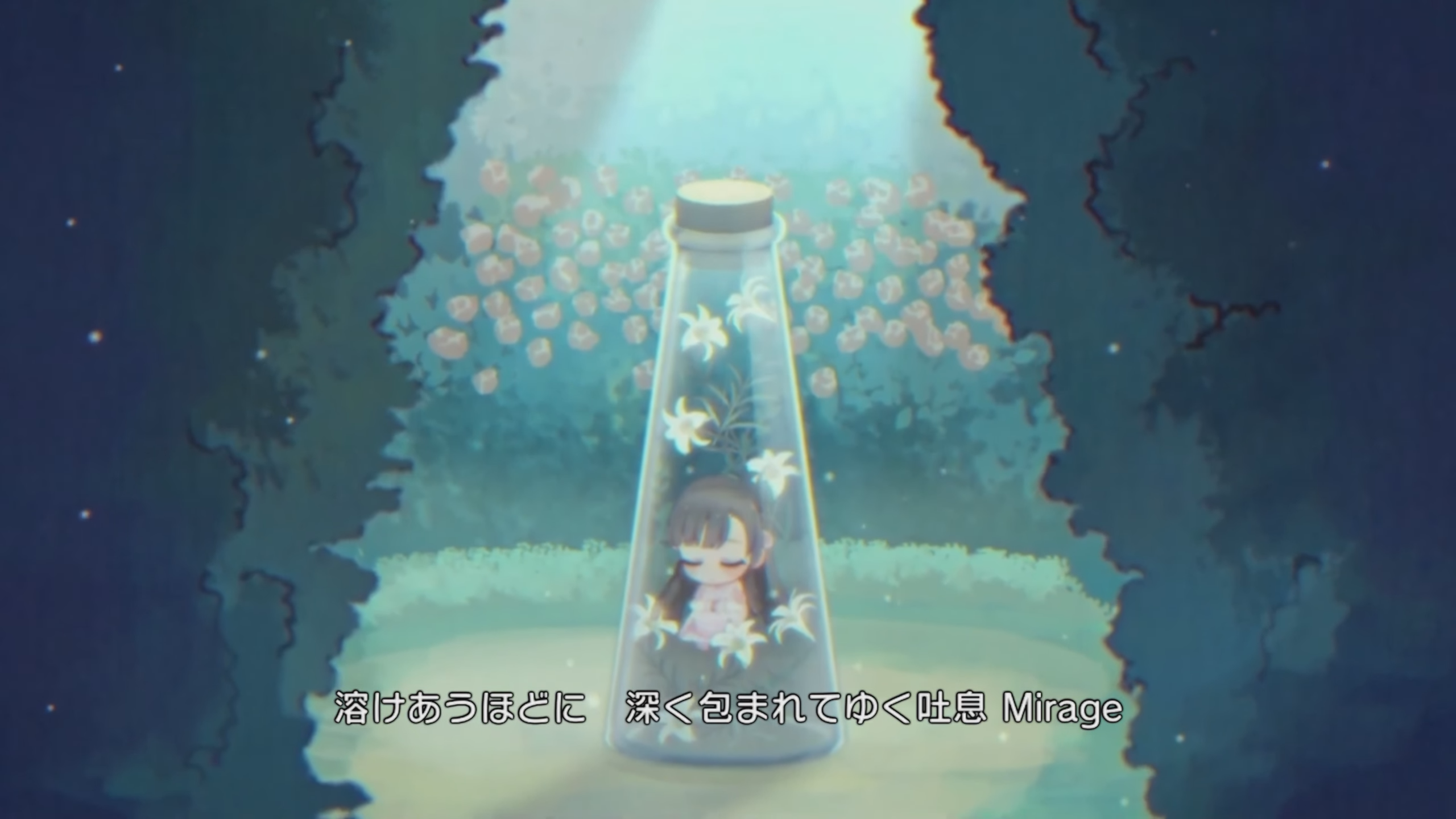
A luminous beacon guides the pair towards each other, in turn serving as a flicker of hope within otherwise sombre surroundings threatening to quash the emotions nurtured within their hearts. The MV’s first half is underscored by this aura of uncertainty, suggestively depicting an innate grasp of genre conventions as they are encased by lilies in the 2D MV, wandering around a flower garden in the 3D with lyrics telling of flowers smothering them.
Their inclusion is indicative of yuri as a genre requiring those within to adhere to performative motions, but not authentic queerness reminiscent of similarly challenging treatises upholding queer legitimacy such as
Yuri Kuma Arashi. Lyrics further allude to chaste conventions defining the genre with barely audible whispers and faint touches, yet they continue to seek the tangible physicality of the other. It is only when they muster up the courage to defy such conventions that they are able to meet in both the 2D and 3D MVs, standing in defiance at the moment “the fingers I so desperately seek sear – ah, we shouldn’t–” reverberates.
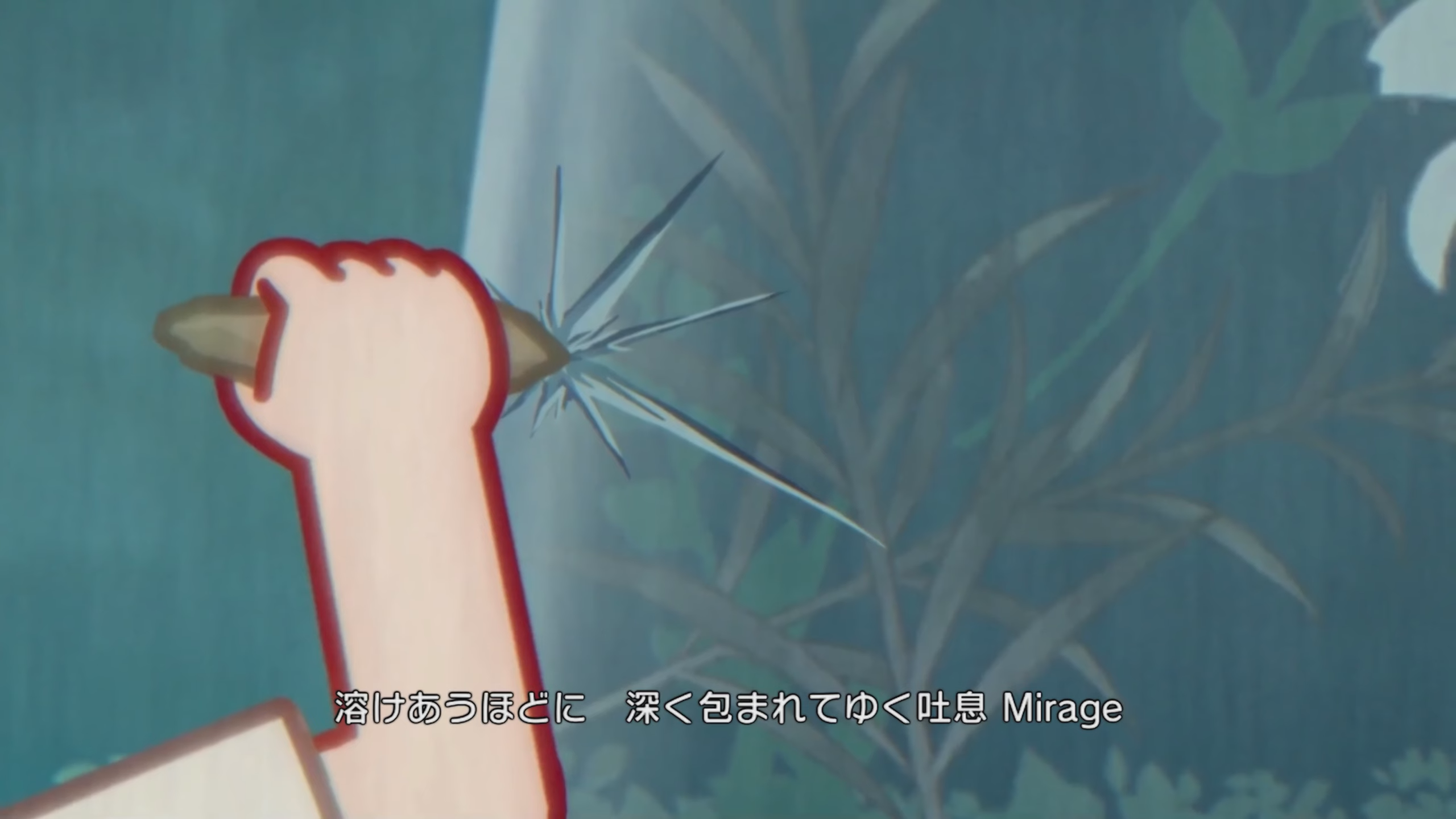
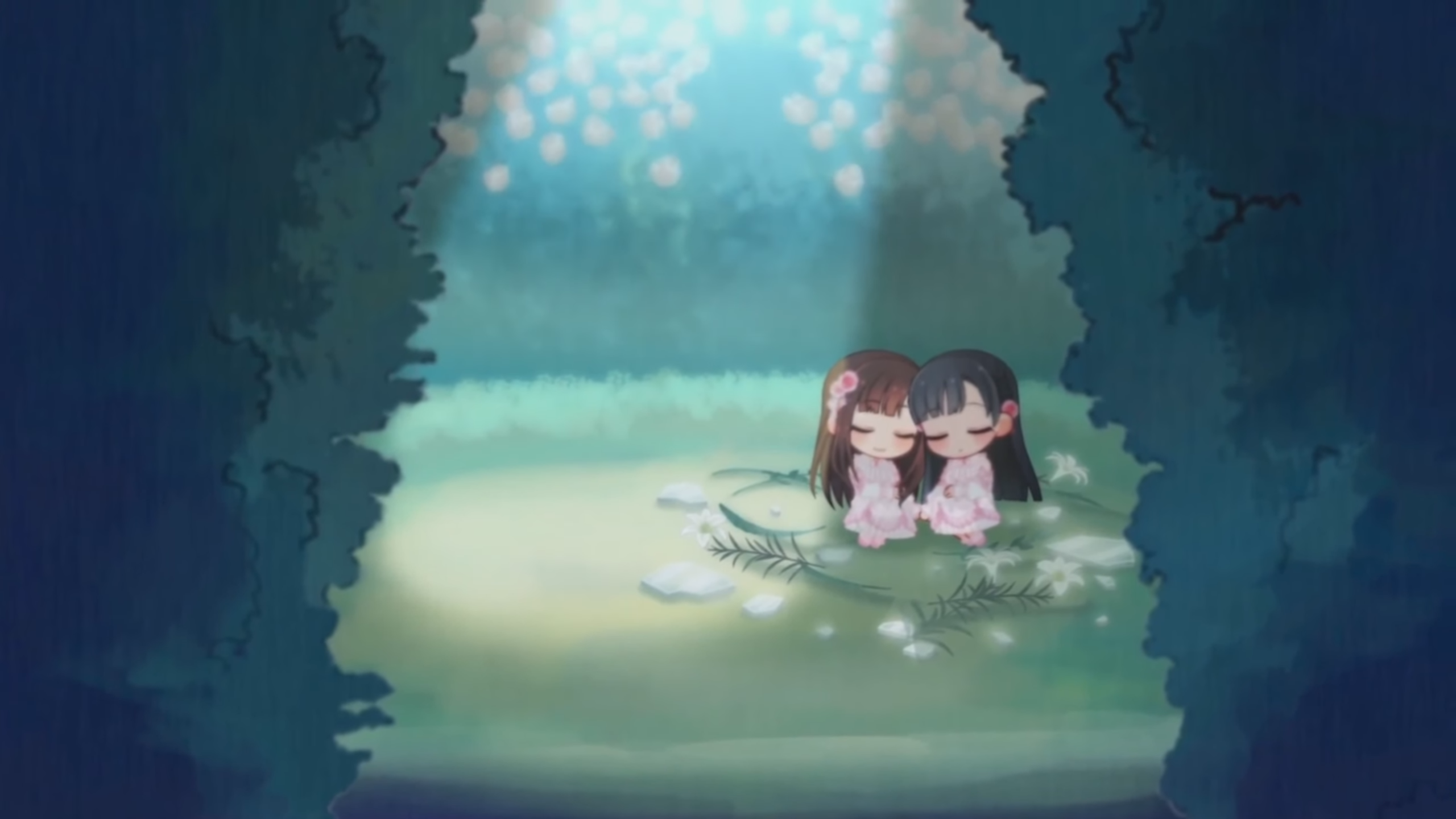
At this point the 3D MV proceeds in typical Cinderella Girls fare through kitsch movements and calm smiles, yet the 2D MV persists in an unusually daring manner with illusory pretences of the genre intentionally fractured; shards emblematic of contrived artifice dispelled into the abyss. Yukari shatters a glass artefact containing not only Sae, but an evocative cluster of lilies. Such a transgressive act symbolizes the liberation from constraining façades, the flowers/genre which sought to stifle them along with society as a whole. As the piece draws to a close, they at last unite – with their reunion serving as a definitive motion that the cloying strictures have relinquished their grip, facilitating the characters to genuinely embrace their queer identities.
Of course, my remarks regarding both MVs may fall under deserved scrutiny considering the above characters are enacting expressions of queerness tailored for a discerning mobile game audience partaking in a landscape where yuri has gained increased traction. Nevertheless, it is important to acknowledge what a beautiful piece Secret Mirage is, and I would count it among my favourite Idolmaster songs with ease.
return