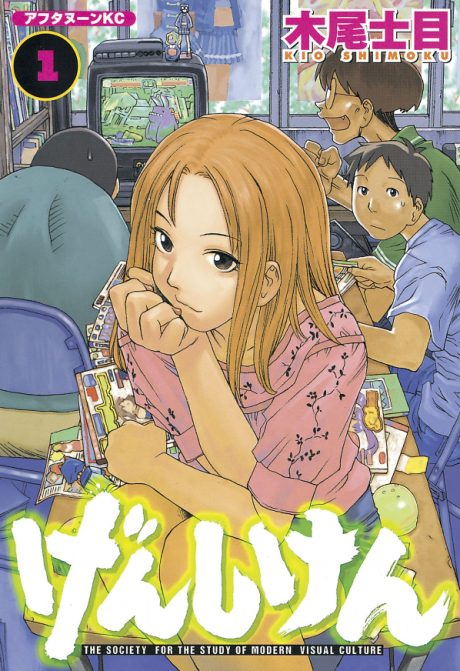
 24/08/2025
 7/10
7/10 2002
2002to come
 25/06/2025 2/10 2021
to come
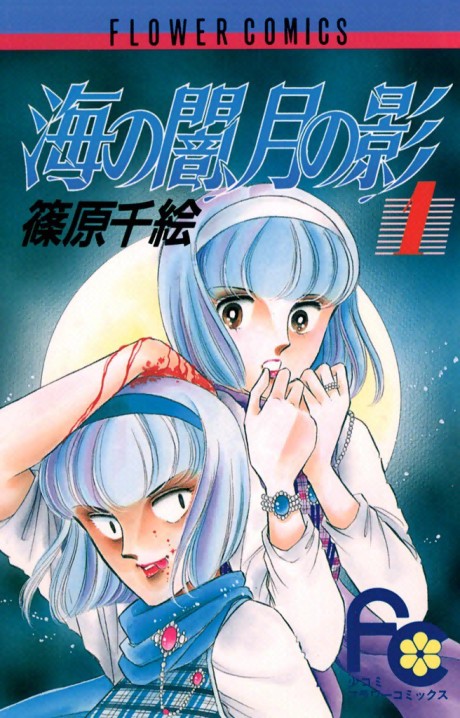 15/06/2025 7/10 1987
Though one may be inclined to parse the shoujo demographic through flushed apple cheeks and fluttering eyelashes, as the new millennium loomed in all its turbid insistence a rupturing took place, in turn casting a shadow over idyllic reveries. Something rotten in the state of girlhood, pages dotted with hearts all but grew slick with arterial blood, vena cavae writhing like sentient tubes.
I place the blame on CLAMP’s notoriously bloody X for my being taken with such spectacles, all grand guignol ultraviolence splattering across the ‘lunatic mystery’ that is Umi no Yami, Tsuki no Kage. While looking through the Q&A box of a creator affiliated with amateur BL group LOVE&DESTROY once upon a scroll I learned of the work’s existence, eyeing its first volume’s cover with curiosity: all maniacal grins splitting across a character’s face, pupils blown wide, suggesting a bloodthirsty descent into the unknown. Pulsating, gory hearts laid bare contextualized amidst the new millennium’s approach. Things were about to change.

Compared to the paranoia-driven curse associated with Tutankhamun’s excavation, twins Luca and Lumi fall prey to a virus lying dormant within the depths of a musty cave; their fate centuries in the making, etched across the distant reaches of space and time. The incident suggestively occurs after their upperclassman Touma, whom both harbour affection towards, confessing to Luca... Much to Lumi’s chagrin, you will soon learn. And thus the virus ostensibly emerges as a crucible in which adolescent unrest ferments and mutates, vestiges of childhood innocence eclipsed by despair with the pair divided once and for all. Illuminated by the moon its all its cold distance, though Umi no Yami ostensibly appears to reflect adolescent struggles (vaguely gestures towards mestruation with powers heightened once a month) its narrative contorts, curdling into something primal. Disquieting, collective faces drained of blood.
That which plagues Luca and Lumi shifts in scope and severity, drawing the attention of those wishing to take advantage of ruinous powers coursing through their veins when the moon hangs high. In order to sever their bond, the corruption first spreads within their home. Air thick with mistrust and confusion, Lumi in all her bloodthirsty delirium commands their parents and older sister to kill Luca. Hospitals are taken over with a swiftness that is chill-inducing, schools provide a stage upon which mass injections are carried out. Blood-seeped reservoirs contaminate prefectures, overflowing nervous systems; bursting through what becomes mindless submission amongst the general populace. Adolescent matters of identity merge with the apocalyptic as global catastrophe beckons, bodies piled high. Even when the possibility of a vaccine arises safety isn’t guaranteed. It’s claustrophobic.

Every bit the catalyst for the above, Lumi’s gleeful descent into cruelty proves unsettling. She cuts a threatening figure with each subsequent transgression a sacrificial gesture where lingering traces of empathy are cast aside. A Touma-shaped fixation enmeshed within the throes of a crisis of identity, a need for validation leads Lumi’s world to irreversibly splinter alongside her moral compass. Desperately wishing to understand what it is exactly that makes the twins so different, why he would be drawn to one yet remains indifferent to the other plagues her every waking minute. Pain is externalized through violence and destruction, each time horror mounting as she drowns a child, murders Touma’s parents, and eventually sexually assaults him. Ding, ding, ding: a death knell resounding through the shattered remnants of her humanity.
As Umi no Yami continued serialization, Shinohara observed an increase in fan letters regarding Lumi. For countless readers strewn across our cybernetic expanse, the passage of time similarly brought upon a shift in perspective. Once eliciting fear in all her bloodthirsty mirth, when revisiting the series in their adult years Lumi emerged as a conflicted figure adrift in turbulent waters. All great Neptune’s oceans prove insufficient in cleansing her soul leading Lumi to wander in despair, the agent of her own destruction. Though Lumi is a difficult figure she is nevertheless deserving of sympathy, and to that end her death proves to be terribly frustrating as it only serves to further the notion of sins being absolved through death. Lumi ought to have been granted the space to work through her trauma while alive alongside Luca, as opposed to opting for the easy option. We don’t even see the aftermath, how Luca can exist without her other half. It feels unfinished.

I also kept waiting for the virus’ origins to be further explored which... never really happened (boo!), but to make up for that we did receive an exhilarating arc reminisent of Diamond is Unbreakable at its most frenetic.
 26/03/2025 5/10 2022
To come.
 09/03/2025 7/10 2023
To come.
 28/02/2025 4/10 2023
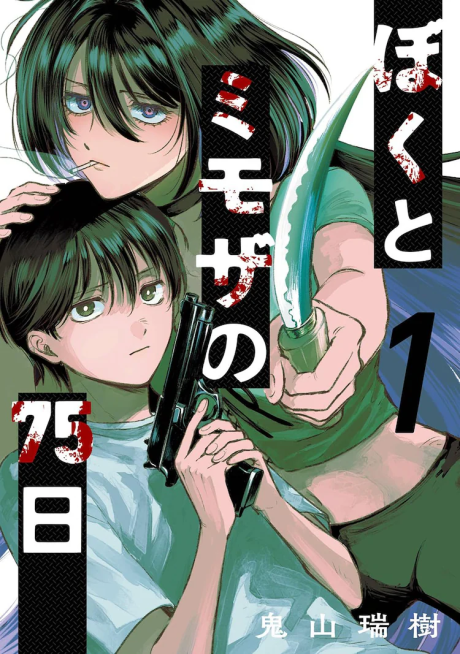
To come.
 11/02/2025 7/10 2016
Iyagatteru Kimi ga Suki is a work which deceptively presents itself as a romcom with a disctintly retro flair, but is in fact a harrowing look at how societal frameworks leave young women susceptible to harm, and how they find catharsis in self-destruction.
 05/01/2025 dropped 2020
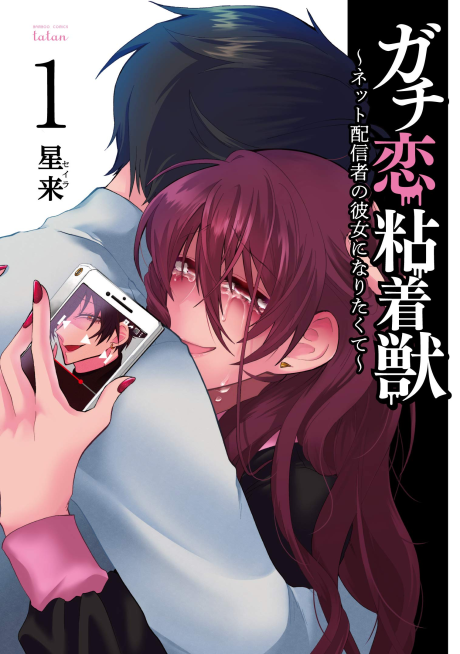
As standom continues to accelerate down dazzling cybernetic highways, the curiously parasitic dynamic between streamers and their disciples twists and warps into something disturbing; malicious intent filtering down through noughts and ones. Those once elevated to near-mythic status, immortalized in the distant firmament through adorning the walls of starry-eyed admirers and magazine interview snippets are now accessible through a means that is both continuous and omnipresent, located in the comfort of one’s pocket. In recent years, a number of series have attempted to address this uniquely digital cultural shift and its ramifications on both parties to various degrees of success (most notably, Ashita, Watashi wa Dareka no Kanojo’s clumsy if well-meaning handling). Gachikoi Nenchakujuu: Net Haishinsha no Kanojo ni Naritakute would be one such series, but unfortunately it isn’t very good.
From its opening pages Gachikoi is more concerned with dilated pupils and leering grins than being a nuanced exploration of the above, all sensationalist gestures devoid of empathy. Hina and Subaru’s arc immediately establishes itself as an absurdly melodramatic affair, drumming up contrived dramatic beats which culminates in Subaru being imprisoned in a warehouse and kept under observation. Such an alarming and desperate bid at monopolization follows an even more brazen escalation which involves Hina attempting to knock Subaru unconscious with a hammer mid-stream while issuing threats of murder. Though Gachikoi’s drama adaptation can’t help but show Hina toying with a taser and rope (cue my audibly groaning “not this again”), thankfully it refrained from indulging in the maddening excess which the manga felt compelled to, winding to a reasonable enough close once the hammer came crashing down.

In turn, from the three episodes I watched Gachikoi’s sensationalist inclinations have been softened considerably. Hina invites a degree of sympathy as she tearfully mulls over her inability to supress those all-consuming feelings towards Subaru; though malice continues to surge through every action they are tempered somewhat. In contrast to his contemptible manga portrayal, all the Machiavellian, cape-swishing pizzaz of a two-bit antagonist, Subaru is similarly subdued. No longer gleefully relishing in the exploitation of wide-eyed devotion, he instead exhibits a calmer demeanour through Hina’s actions legitimately having a ripple effect on his behaviour. Bundled up in blankets, he cuts a solemn figure as opposed to his trauma being reduced into a poorly constructed vehicle for comedic effect. Much of the manga’s insidious elements (the line “if I get scared like the last time (you attempted to initiate sex), you don’t have to stop” legit had me stunned, Hina please have some self-respect) are excised, though this revision similarly diminishes a large swathe of questionable behaviour which the series ostensibly seeks to critique.
The means in which standom engages with would-be deities is irreversibly distorted through the internet’s prism. The lethal self-destructive spiral of one-upmanship, in which obsequious displays of calculated affection surface through extravagant oshikatsu rituals. Donating beyond one’s means in a salivating bid at recognition, longing for one’s name to take shape in the air, tumbling from lips at the other side of the screen. Recklessly doxxing individuals based on kneejerk assumptions, carousing amidst the inky mire of egocentrism, muttering that it’s all in service of their beloved. Vicious in-fighting, lives shattered to give meaning to years spent wasted on who even knows anymore. The unbearable weight of unreciprocated feelings, all-consuming yet fundamentally hollow – no one really knowing the person behind a pristine presentation meticulously designed to soothe and invite fawning. It’s too much. Gachikoi gestures toward these unsettling dynamics, its proverbial finger on the pulse of our repugnant zeitgeist, yet it ultimately remains too steeped in sensationalism to truly dismantle them.

Kotono and Cosmo’s arc makes for a thankfully more grounded experience, all things considered, yet its central conflict (Cosmo haunted by Subaru’s hedonistic womanizing almost destroying their group, drawing a clear line between himself and obsessive devotees stans) disappears into the cybernetic ocean once a clumsy romantic resolution takes form. That the pair ultimately enter a relationship makes for a disappointing end, particularly given that Kotono’s behaviour is what unnerves Cosmo so terribly (not even factoring in that she lied to him about it!). The resolution feels less like a natural progression and more like an implicit endorsement of Kotono as being One of The Good Fans, despite embodying all that Gachikoi seeks to call into question.
Though Kotono and Cosmo’s arc was certainly better than Hina and Subaru’s (not exactly a high bar to clear, mind), with the clumsy resolution brought about a tempestuous gust of ill tidings threatening to swallow the cast whole. Would similar behaviour be rewarded going forward? At 41 chapters of the manga, and three episodes of the drama, I decided it would be best not to dwell on it further.
 18/01/2025 6/10 2011
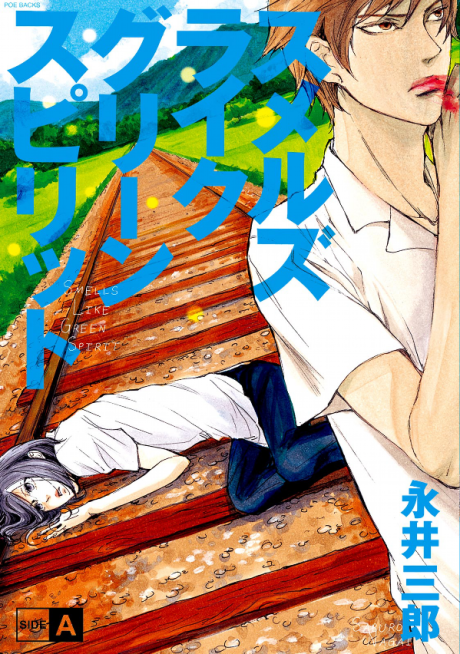
A BL oft-celebrated for not quite being a BL, Smells like Green Spirit examines queer solidarity within a rural ‘90s Japan context.
Wrote about it here.
 06/01/2025 5/10 2021
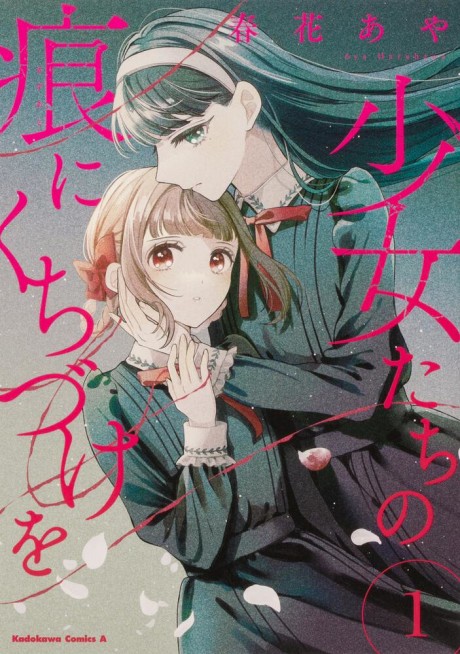
Guided towards a cloistered garden in which lilies bloom with reckless abandon, Kiss the Scars of the Girls pays tribute to yuri-swathed conventions with a sanguinary twist – those flitting about its proverbial garden... are vampires?!? A traditionalist soeur dynamic’s sanctity, all breathlessly uttered “oneesama”s and nervous fumbling, is distorted through a blood-soaked lens as upperclassmen instruct starry-eyed protégées to hunt down humans when the clock strikes midnight on their fourteenth birthday. Bathed in moonlight, sworn pairs take to the streets in search of their next victim.
With petals dyed a deep red, a queer coming-of-age narrative ought to all but write itself with there being a stark division between vampires and humans, those within its bloodthirsty vortex learning to embrace their transformation. Regrettably, Kiss the Scars of the Girls has little interest in anything beyond perfunctory, surface-level gestures. In the series’ wake, lilies are left swaying listlessly and without purpose.
The work marks Haruhana Aya’s shifting from anthology one-shot confines to fully-fledged serializations, and it’s a sentiment woven into the pages of three muddling volumes. A flourishing soeur dynamic in which both parties eventually draw closer together and reach mutual understanding is clumsily undercut by a narrative which seeks to mingle cloying vignettes with mawkish melodrama, stumbling throughout. Drawing from a fecund reservoir of yuri-lite tropes, there’s an attempt at harmonizing these contrasting elements: light and dark, sweet and bitter. A rose in full bloom is snipped, thorns pressing into delicate fingers. Pacts, an eternal vow, sealed with blood. Yet the attempted balance feels disjointed, resulting in a serialization that simply lacks cohesion.
Critical junctures collapse following resolution, leaving behind jagged fragments. Rather than confronting consequences of destructive acts committed whilst in grief-stricken throes, a predatory lesbian™ is marched off into the proverbial margins; ostensibly absolved of sin. Interspecies tensions are faintly grasped, haunting a vampire and vampire hunter’s burgeoning alliance which shudders to a hurried “the next time we meet, we’re enemies!” stop. There are promises in both instances to meet again, future encounters dappled hazily on the horizon, yet they amount to gestures left unfulfilled, abandoned.

Had the central relationship proven to be of interest, perhaps the above sloppiness could be forgiven. Regrettably, it simply exists – likewise not feeling earned. Admissions of what constitutes as smouldering candour turn to embers, neither party’s anguish coming across as credibly written. At least the art is pretty, huh?
 16/07/2024 dropped 2022
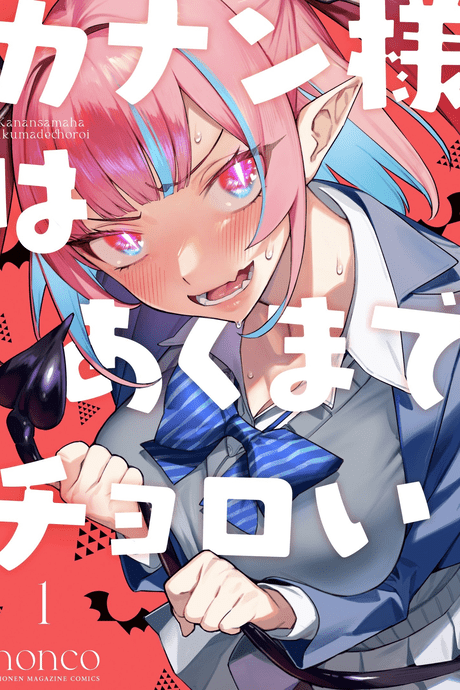
Though adorned with all matter of teasing proclivities on its uniformed sleeve, Kanan-sama wa Akumade Choroi appeared to present itself as an unexpectedly earnest piece about the exceptionally goofy devil Kanan and the relationship shared with her somewhat eccentric human boyfriend Kyouji. A level of sincerity persisted in how brazenly the pair’s antics were conveyed, a whimsical air suffusing their interactions. For the first twenty-something chapters, Kanan-sama thankfully managed to avoid shifting into the domain of adding a litany of supernatural entities vying for Kyouji’s affections through positing a refreshing Kanan-centric perspective.
A voluptuous succubus derives amusement from encouraging the pair’s growing relationship, much to Kanan’s skittish chagrin. Kyouji’s childhood friend quickly awakens herself to the delights of Kanan’s harsh words, deftly evading what could have been a prolonged, vexing source of jealousy through having seeds of fondness instead take root for our pouty heroine. The anticipated parade of busty paranormal splendours, upping the titillating ante every few chapters to ensure readers stay entranced and firmly under their spell as Kanan grows increasingly desperate, disappeared in a puff of lilac smoke.
Unfortunately the subsequent introduction of otherworldly beings fall into regrettable genre pitfalls, particularly concerning Kanan’s family. Being granted entrance into the netherworld is where my enjoyment similarly plunged into infernal depths; fondness towards an eccentric dynamic turned to ash. Her family members each harbour an ostensibly reprehensible side, warped and moulded by their desire towards either Kanon or Kyouji transforming the netherworld sojourn into an uncomfortable harem-esque pastiche. Upon hearing the extremities that took place within the manor walls, Kyouji’s childhood friend is amazed – it’s a realm catering to every conceivable fetish.
A yandere sister wishes to desperately monopolize Kanon… But she just so happens to be a scantily clad fetish streamer of renown, who finds herself awakening to NTR. A precocious, bratty sister with sharp edges and sharper words toys with Kanan and Kyouji both… But she maintains a shrine devoted to Kanan, provoking her older sister and deriving delight from all the furious chastising (and maybe more importantly, her spanking). An androphobic mother… Who eventually gets upset that Kyouji won’t see her as a ‘woman’. Such developments detract significantly from Kanan-sama’s initial charm, plunging the narrative into a less enthralling and altogether more formulaic realm. An angelic being similarly falling for Kyouji pushes the story more into hackneyed love triangle territory, and the moment Kanan’s fake family houses her in a kennel and makes her their dress-up darling, I had enough.
Dropped at 68 chapters. Couldn’t even bring myself to survive another chapter for the meme of it all, which is perhaps the tell for how bad it truly gets.
 16/06/2024 7/10 2017
Amidst a perfunctory deluge of S&M-lite material featuring playful teasing and smug expressions plastered across many a block list, Pleasure & Corruption/Tsumi to Kai is refreshingly transparent in its portrayal of exhibitionism, and how being tied up can provide one with a degree of psychosexual liberation. Initially drafted as a straightforward piece featuring a peculiar girl forcing its crime-committing protagonist to masturbate, creator Someya was advised by her editor to emphasize the underlying perversions resulting in a uniquely erotic – and at times, tender – work. Protagonist Zen falls into taking upskirt photos to stave off life’s mounting pressures, and finds himself subjecting student council member Ayame to the same despicable act.
With a bond woven out of the finest thread, unpleasant beginnings lead to a situationship in which the pair are afforded freedom through the act of being bound; a whimpering, flushed Zen at the mercy of Ayame’s skilled hands. One may anticipate a litany of tawdry, mischievous eroticisms to follow, however a deep appreciation for the art of rope bondage is woven into the fabric of Pleasure & Corruption providing each act with a respectful, and deeply sensual flair as the pair open themselves up further. Even with a rope-bound Zen pushed to his limits, within Ayame’s domain a tacit understanding exists between them – he is safe, as is she. Stirrings of affection lay dormant as they navigate past traumas, finding catharsis – and forgiveness – in the physicality.
This is a sense which is beautifully reinforced through a character infatuated with Zen who, through various circumstances, similarly becomes taken with rope bondage. Dazed at the rope marks faintly visible on Zen’s skin, the character fails to consider all that could possibly go wrong, let alone the dangers inherent to sloppy workmanship and lacklustre preparation. Ayame later rather tellingly emphasizes that in the character’s single-minded, egocentric approach to the act she’s not thinking about Zen at all – it may as well be masturbation.
During the afterword present in each volume, Someya warmly reflects on her experiences with attending an S&M bar for the first time, speaking with a counsellor who specializes in the act, and a practitioner adept at drawing out the hearts of women in live shows. Such reflections provide a distinctly feminist framework to Pleasure & Corruption, further compounded through Ayame’s mother – a figure similarly involved with rope bondage – bestowing the art upon her daughter as a means of empowerment within the suffocating confines of a patriarchal realm which seeks to bind women; stripping them of autonomy. Engaging with bondage facilitates a mean of safely navigating the trauma that has been sustained through a most heinous act.
To that end if there is one area where the narrative regrettably fumbles, it would be the revolting chauvinist of a student council president, who through almost farcical exaggeration seeks to subjugate the woman that refuses to allow gropers or upskirt photographers escape retribution. “Go on, try and resist. But you’re still just a woman in the end. You can’t match up to a man’s physical strength” he sneers, leering at a bound Ayame. It is deeply frustrating that despite her being acquainted with the tools to gain a footing in this uneven society and assert her agency, Pleasure & Corruption nevertheless puts her in a harmful situation. Although she emerges mostly unscathed, also reaching a breakthrough of sorts regarding feelings for Zen, one can’t help but wonder why that entire plot point was included to begin with given that Zen himself similarly represented this contemptuous brutality at its most repellent through the upskirt photos – this act, and underlying drive embodied all that Ayame seeks to dismantle, which results in her dragging him to the roof in chapter one.
Despite the frustrating elements towards the end of Pleasure & Corruption with the above character, it nevertheless emerges as a respectful and distinctly erotic work which warrants attention if the notion of a narrative focused around the psychosexual machinations woven into the existence rope play strike your fancy.
 11/06/2024 6/10 2020
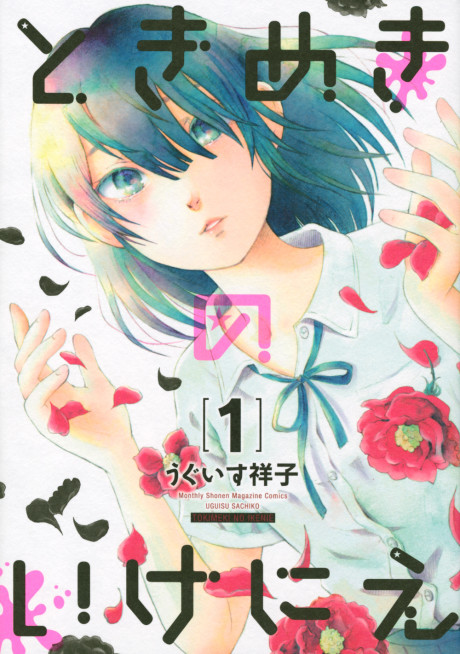
An austere mansion shrouded in darkness atop of a hill. Necklaces fashioned out of teeth, giddily gathered from the garden. A candlelit basement, illuminating hooded disciples praying to a nameless deity. For all its ghoulish scaffolding, Tokimeki no Ikenie ought to have been a camp thriller drawing on the feminine grotesque through a blood-drenched coming-of-age allegory – and yet, it’s all over the place. Lulling the unsuspecting reader in through fairly insipid boy-meets-girl beginnings, by the end of that gruelling first chapter a maid with an eyepatch glowers menacingly, a family patriarch is cast in all foreboding shadows, and a positively vampiric younger brother cackles all the while.
Born to a family partaking in blood rituals to stave off the lofty prophecies of Nostradamus’ turn-of-the-century calamity, protagonist Mari must contend with wild-eyed housekeepers lopping off ears in service of the greater cause, wounded sacrifices locked up in basements, and cannibalistic brothers escaping from it all while she struggles to conceal a crush towards an affable everylead and dreams of getting her manga career off the ground. For one hopeless moment, a light shining amidst the blood-soaked gloom, it seems as if all the nonsense within Tokimeki no Ikenie is on the verge of coalescing through it being Mari’s turn to partake in the blood ritual. Doing so may result in a god growing within, suggestively contextualized amidst the nascent burst of affection towards everylead.
To its detriment however the narrative has little interest in developing Mari beyond the gallows of C-movie absurdity. Once the erstwhile antagonist, her father, is painted in a more sympathetic light Tokimeki no Ikenie goes out of its way to drain the reader’s good will. An attempted assault painted in a comedic light. Echoes of a slasher horror, through an escaped asylum patient maiming teens in a camp-like environment. Gun-wielding, bandaged thugs hellbent on revenge. A mansion up in flames, swallowing everyone within its dreary walls. To my utter disbelief it just kept getting worse, and this doesn’t even begin to cover the rubbish with Mari’s own ascent to godhood.

What you will find here are a collection of half-baked thoughts on manga which I’ve recently finished.
...Or in some particularly egregious cases, dropped?!
Spoilers will typically ensue, so tread carefully.
 genshiken even if i'm not fifteen umi no yami, tsuki no kage aishita bundake aishite hoshii shuumatsu, kimo to 75 days of me and mimosa iyagatteru kimi ga suki gachikoi nenchakujuu smells like green spirit kiss the scars of the girls kanan-sama wa akumade choroi pleasure & corruption tokimeki no ikenie