Denpa Onna to Seishun Otoko’s Transmission of
Disaffected Youth and Social Withdrawal
To see if anyone was receiving my signal,
I desperately tried connecting.
While everyone else repelled my waves, there you were, blinking and receiving.
Even if our telepathic minds happen to be on conflictive frequencies –
I’m sure you managed to receive something
and oh, how I adore you for that.
Denpa Onna to Seishun Otoko immediately establishes itself as a raw curio for disaffected youths – a Shinsei Kamattechan album at full blast, all secrets scrawled on hastily ripped out diary pages. Normality be damned, abnormality and its gloomy tangles govern over an exhilarating opening sequence courtesy of sub-cultural misfits snarling about alienation. Framed within the hollows of Erio’s grey psyche, a social epidemic crackling like electricity takes the form of television static and lightning bolts, chaos personified. Everything is a blur, nothing makes sense.
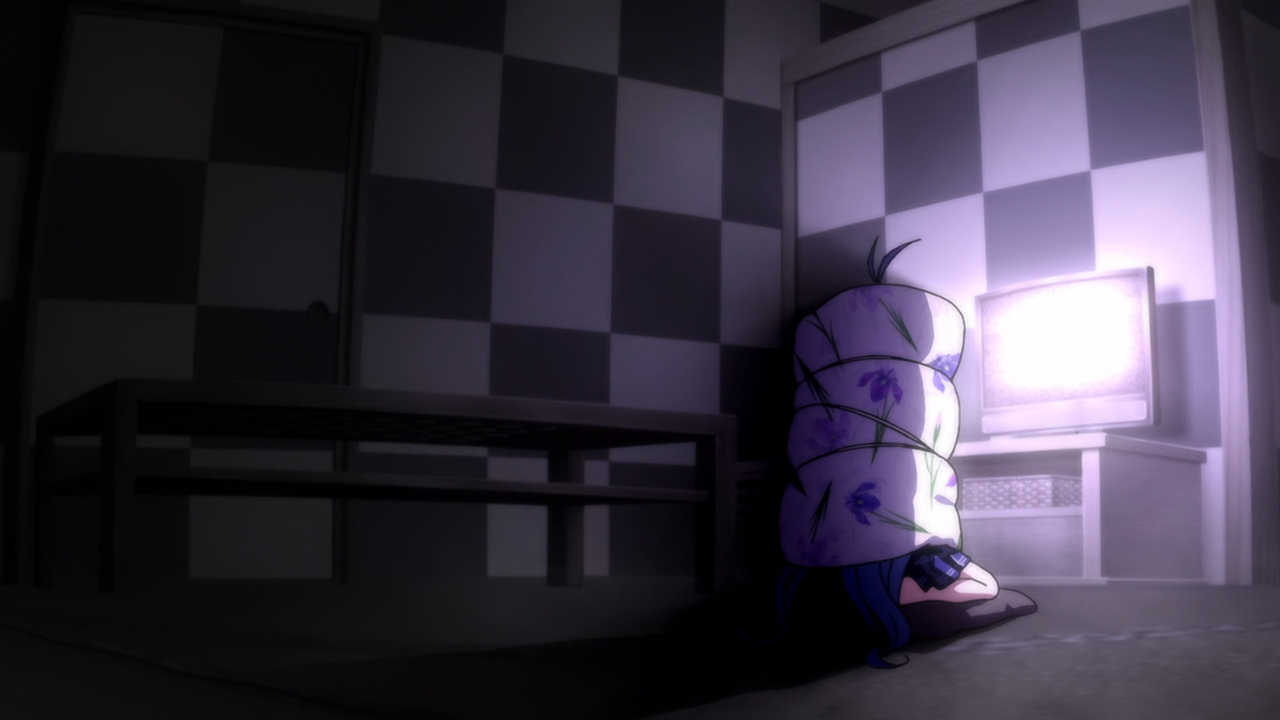
Having dropped out of school long before cousin Makoto’s arrival, Erio spent the past year swathed in the comforting confines of her futon relinquishing rational thought to aliens soaring above, celestial bodies offering her guidance where humanity has failed. Perceived as a remarkably outré figure by the town’s inhabitants, she is reviled with a practiced avoidance viewed as oddity traipsing around in her futon. Barely existing on a diet of pizza and white noise, the third episode suggestively opens with a ticking clock, its symbolism deafening. Pointing towards all that Erio has lost and stands to lose as seconds slip by, turning into hours into days into years.
Mother Meme likewise displays a reluctance in engaging with Erio and her situation, constructing nonsensical platitudes in a feeble bid at diverting Makoto’s attention. It would be best if he ignored the presence squirming about on the floor, instead focusing on the ‘happy family’ now consisting of Meme and Makoto; daughter intentionally left out of this wretched family portrait fashioned out of synthetic tools. As if in protest, Erio disrupts a lavish meal carefully spread alongside the collective assumption of social withdrawal being something to be kept behind closed doors.
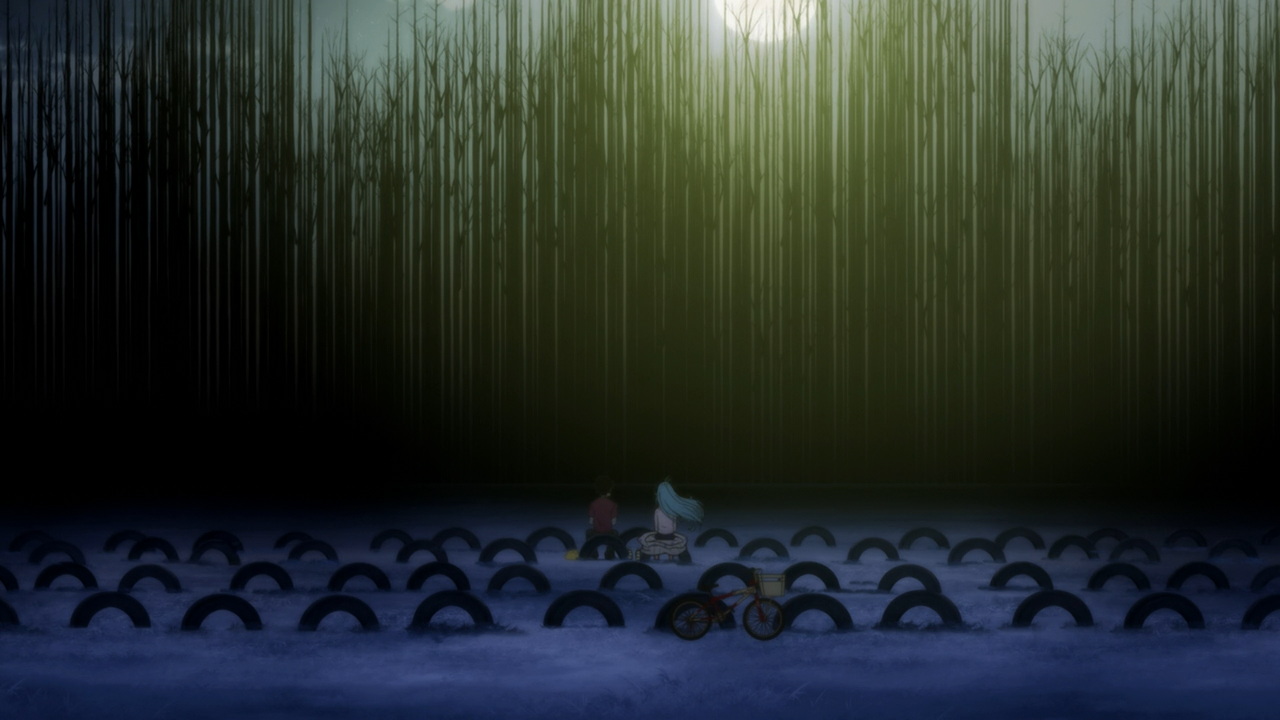
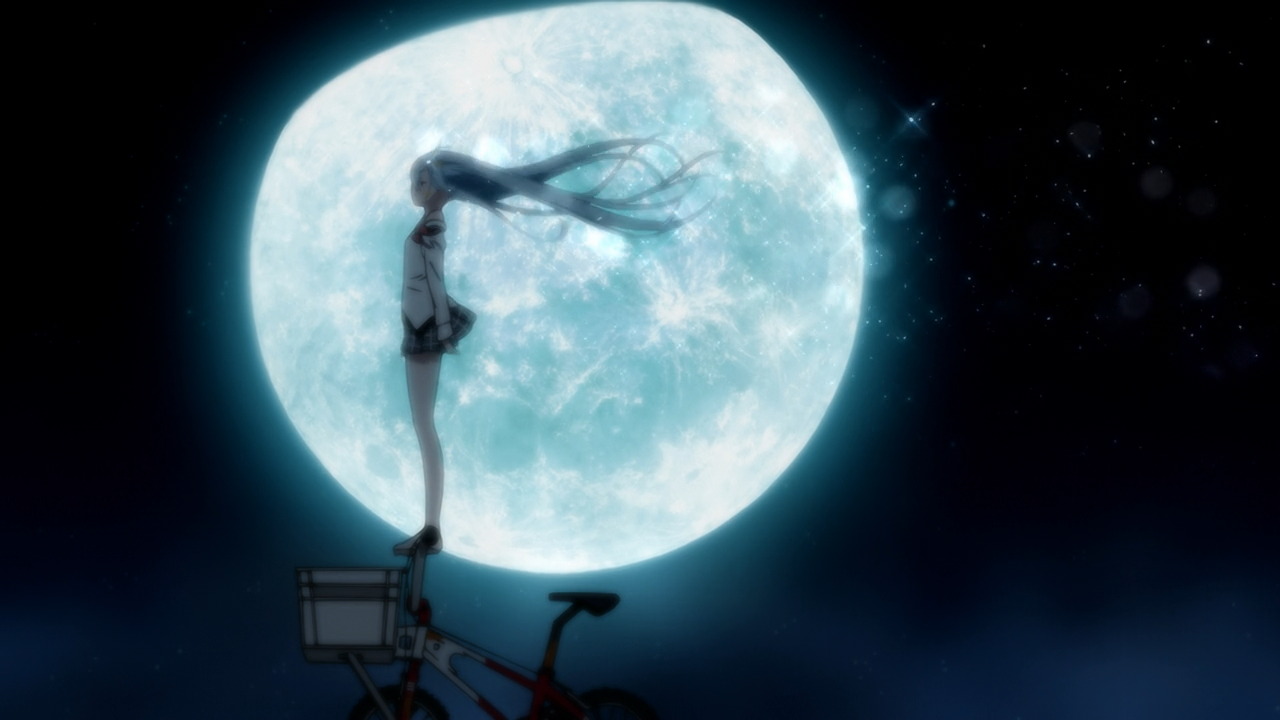
While the interrelational dynamics underlying this sequence are portrayed in a distinctly anime manner, a poignancy nevertheless seeps into such a schismatic distinction within the Touwa family unit. Not a single relative is aware of Erio’s existence, as if to suggest she’s a dark secret to be hidden in the shadow of the family home, only emerging within the safety of night. A dark world with slivers of light twinkling through, much like space itself is where she can walk free – gingerly perched in Makoto’s basket à la E.T., all legs akimbo and dazed expression, calls of ‘the earth is being targeted’.
As a result of contentious contextual cues, vilifying Meme for not actively striving to remedy Erio’s case of social withdrawal would be unfair for she lacked that awareness, similarly left in the dark of society’s collective shade. The mother saw that her daughter wanted to be left alone, so left her. Meme likewise avoids conflictive situations, a birthday in which she turns forty weighted with ruminative admissions of never having learned how to combat stressors. If she had, Meme reflects, perhaps Erio would have been in a position to tackle her own, remaining in the education system as opposed to immersing herself in the downy pull of a futon. A heart-rending vulnerability suffuses their lineage, Tamura similarly lapsing into escapist conceits once her husband passes via flights of celestial fancies during her twilight years; trembling hands, talk of aliens offering solace in the midst of grief.
Since death will soon be upon her she is reluctant to make the most of what little time she has left, descendants in turn influenced coaxed into a developmentally ruinous circle fashioned out of helplessness and avoidance. In one of Denpa Onna’s more striking sequences however, Meme ultimately resolves to fight the aliens that have seized control of her family, dispelling the illusory fugue of determinism through taking matters into their own hands. Life is worth living, something is worth hanging on to even in the face of traumatic, life-changing events. It’s better to look towards the future instead of abandoning oneself to interstellar reveries and aimlessness.
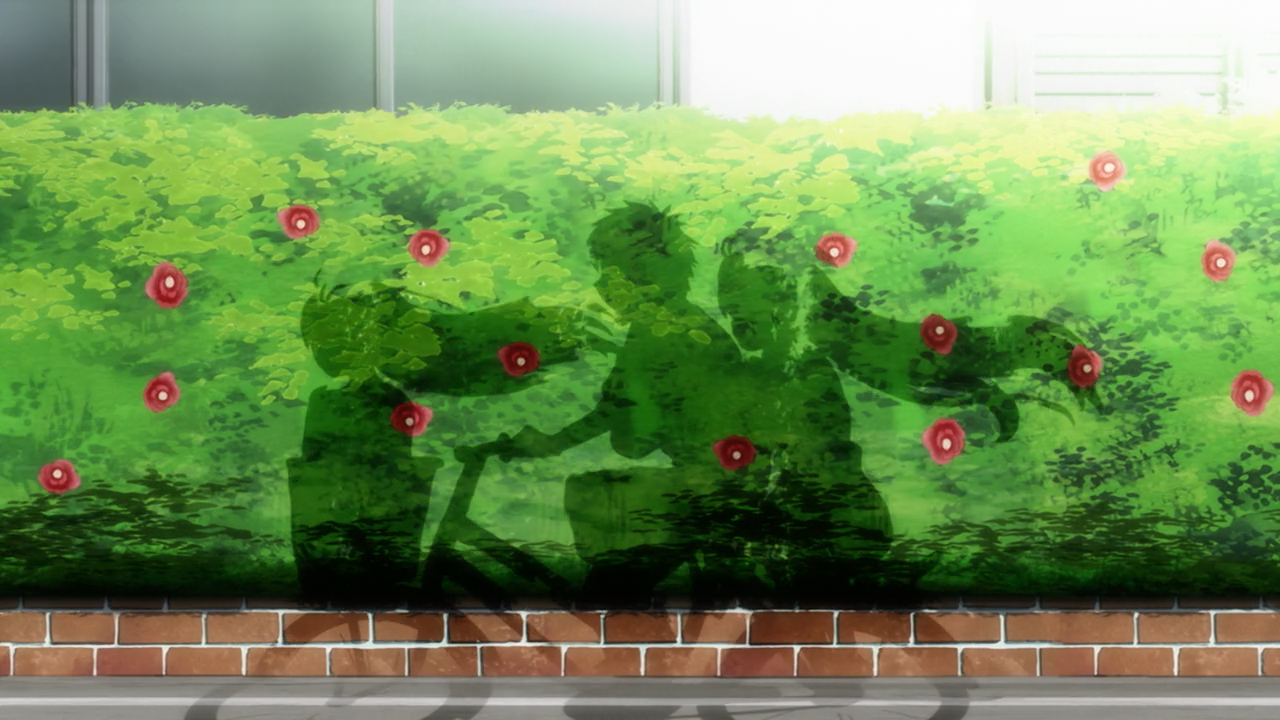
Once the ‘aliens’ disperse into the cosmic ether, Erio struggles with group philosophies together with returning to civilisation. Having formally left the education system enrolling for a second time appears to be prohibited, yet the uniform on display in her room, immaculately pressed and ready to wear speaks volumes of a society unwilling to support its alienated. As a result of Erio’s notoriety, seeking employment initially goes poorly with one employer rejecting her on the spot, evidently reluctant to hire someone of her social standing. Although a position is eventually taken up at Tamura’s store, reintegration appears to be a challenging concept with former classmates deciding to no longer visit once they notice Erio is working there.
Seditious sub-textual connotations further extend to Makoto, smitten Ryuuko alluding to Erio’s tenuous position as a means of gaining social capital and dispelling the cousins’ intimacy. Such a damning accusation is conveyed via Ryuuko’s idiosyncratic manner – all gesticulations and bright smiles – yet on an oppressively muggy day with rain this heavy constant, the potential ramifications are depressingly clear. If Makoto were to stay with Erio he would be subjected to a similar mode of ostracism within their profoundly collectivist society, shunned by association. Later flipping through a reference book, Makoto selects a bright coloured fish yet Ryuuko absentmindedly mentions it’s better not to stand out; a sad microcosm of what Erio must face on the road to rehabilitation.
In 2010 the Japanese Cabinet Office surveyed a population of 5,000 individuals between the ages of 15 and 39 regarding social withdrawal. Although results were empirically suspect and ultimately drawing on vague demographical approximations, further excluding an aging hikikomori population, it was nevertheless estimated that 696,000 people in Japan are afflicted with theDespite the brouhaha enveloping such a challenging condition assistance continues to be lacking, particularly where regional support centres are concerned reflecting how Erio was left adrift in a town presumably besieged by a paucity of services and offered no alternative. How she is approached by the town’s residents similarly reflects a deeply entrenched ignorance regarding her situation, ostracised with an element of dehumanization surfacing through being referred to as ‘that’ (‘あれ’) by one character.
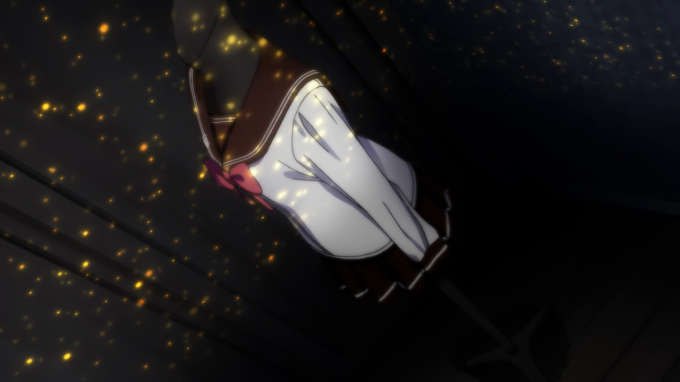
Throughout Denpa Onna the prospect of social reintegration for Erio proves to be an intimidating constant, a cultural ethos built upon the foundation of collectivist conceits unavoidable. Despite holding a desire to attend school with Makoto, it seems that Erio is unable to formally return to the education system with those involved presumably having espoused a negligent stance through allowing her to leave, a lack of accommodating initiatives available.
Towards the anime’s end however Erio has displayed considerable signs of improving with regards to positive functioning, immersing herself in activities that would not cause a strain such as joining the local baseball team and conducting planetary activities in a safe, relatively distanced and clinical manner. While Erio’s trauma persists, aliens never far from view, through the aid of interpersonal support she is gradually coming back down to earth.