Closing the Underworld’s Gateway:
Hunter x Hunter and Avoiding a Developmental Death
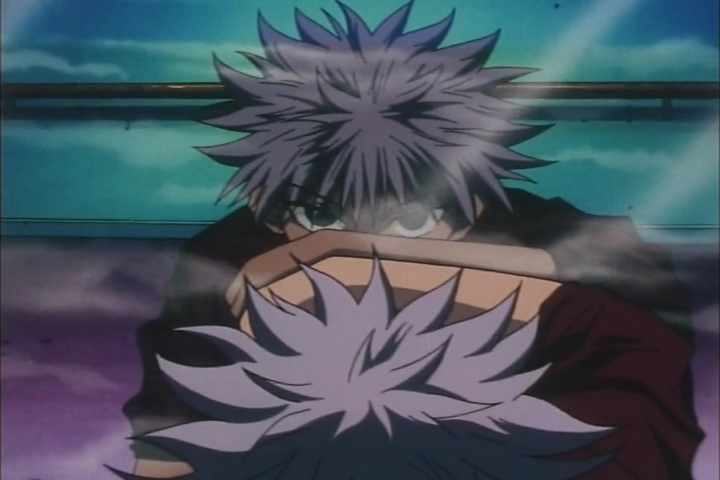
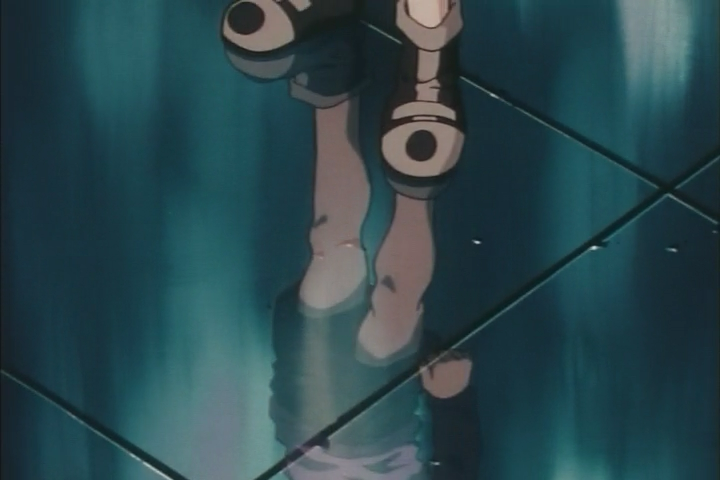
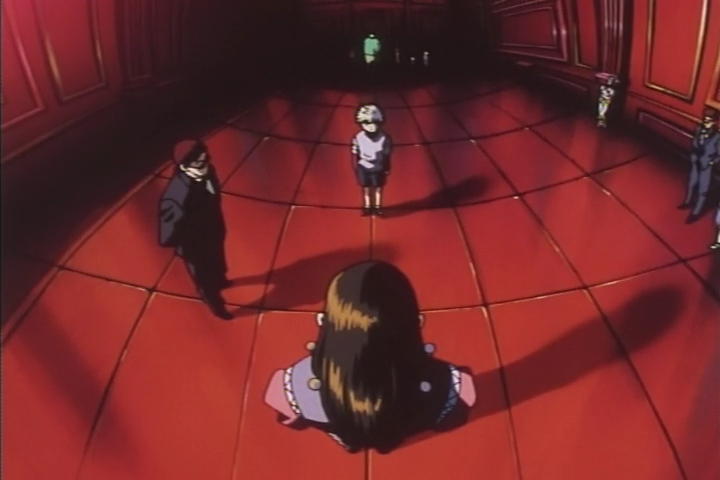
A susceptible emotional state arguably renders sibling Illumi’s oppressive approach designed to subjugate all the more effective, taunts of Killua never becoming a Hunter dragging out what had been prowling around his subconscious for all to see. This unknown quantity cutting a remarkably unsettling figure, his blank stare reminiscent of abyssal fissures threatening to engulf. Similarly positioned to reflect the Zoldyck family’s daunting influence, Illumi quite literally dwarfs Killua in each tense frame through taking on a larger-than-life existence. In comparison to the duelling hall’s vast scale shown in previous battles, it narrows in a devastatingly overpowering manner to reflect Killua’s mental state as developmental tools are deprived. Shattered into pieces, with seemingly no hope of ever reassembling.
Although Killua musters up a feeble rebuttal in a bid at warding off the psychological onslaught pulling him ever-deeper towards devastation (track resounding within the hall’s hellish depths quite solemnly titled ‘黄泉への扉’/‘Gateway to The Underworld’), his “I want to be friends with Gon” – something he had never previously articulated let alone acknowledged – falls on deaf ears. It’s a statement which results in a dull ache, for during emerging childhood the concept of positive peer relationships ought to come as naturally as breathing. Not murdering.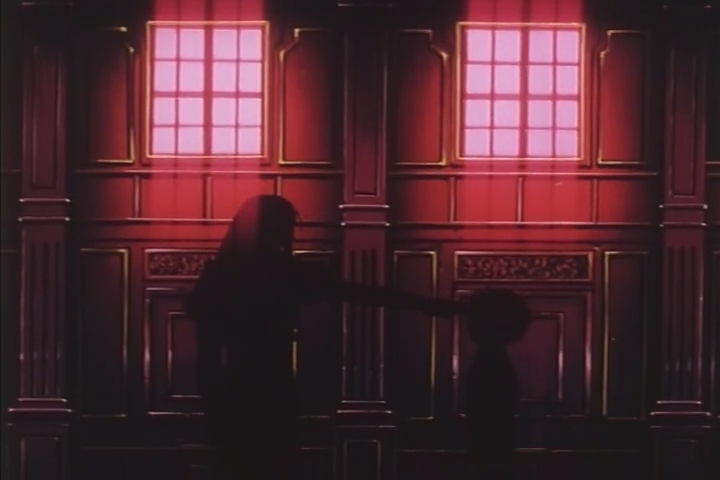
Illumi’s response is to cast aside a child’s attempt at bettering themselves, of living a better life, to scoff at the notion of an assassin even being qualified to have friends. If Killua can no longer pride in accomplishments which ought to have resulted in Hunter par excellence status, can no longer look towards friendship as a viable option ascertaining his humanity… Then it seems the only thing left is to quietly let the individual be killed, assassin rising from a sea of blood. It’s a sequence laced with distressing connotations, enhanced by the masterful production with Illumi positioned as gatekeeper to a developmental underworld painted in the bleakest of reds and blacks.
Takano’s voice distorts together with foreboding organs, Mitsuhashi’s trembling register bringing an internalized nightmare to life. A dark road stretching out into infinity with no end in sight, Kilua thrust into stygian gloom – and it’s all ominous flutters with convincingly torn character animation. The score is further imbued with a level of prophetic unease; among the more unnerving sequences I’ve witnessed through further utilizing binaural recording in order to instil the viewer with a similar sense of the uncanny.

To cast aside the individual is to die a developmental death, self-actualization and countless uplifting sentiments lost to the netherworld’s cavernous depths. Killua yielding to Illumi’s regressive spiel serves as an agonisingly poignant confirmation that those raised with the unfathomable confines of the Zoldyck estate are doomed to never truly live, traces of individuality ephemeral plumes whisked away into the psychosocial ether. While dragging Killua back into the light where he belongs ultimately appears to prove favourable for Gon & co., the shadows lie long and heavy. The anticipated sense of relief associated with emancipation is lacking, marred by a distinctly supernatural quality. Even if the individual were to travel to the ends of the earth, he would be sure to return as an assassin – a suggestion sealed with a blood oath, leaving an uneasy question mark hanging over the whole affair.
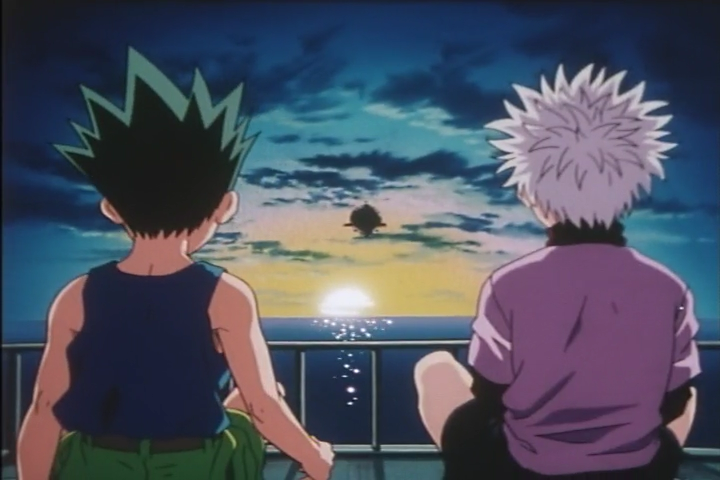
But people are stronger than they appear, and the same applies for both Gon and Killua. Through their meeting, their own worlds have changed for the better. As they venture out into the world, we are reminded that a flicker of hope can light the darkest paths, and that even the deepest wounds heal over time.