Although those earlier episodes of
KareKano are concerned with the affecting minutiae of Yukino and Arima’s burgeoning relationship, in shoujo land rarely does ‘the course of true love… run smooth’. Enter Tsubasa in an id-fuelled maelstrom of pouts and scowls, resenting Yukino for digging her claws into Arima. While initially portrayed as yet another antagonistic cog fuelling the collectivist machine that is shoujo bullying, Tsubasa is in fact a pitiful figure who managed to see something of herself in Arima. Beyond humourous attempts at middle school wooing, they gravitated towards each other due to similar sorrowful pasts. Although Arima’s issues simmer beneath an immaculate veneer, ensnared in an increasingly convoluted web of self-loathing and expectations spun across the series’ entirety, Tsubasa’s are explored through an arresting two-parter.
In quite the incisive departure from an airy sketch of nascent affections flourishing, episodes twelve and thirteen of KareKano paint a desolate wasteland of a family under strain; loneliness tarnishing the Shibahime family portrait. Change threatens to rip a canvas lovingly assembled asunder with Tsubasa’s father falling for someone, leading to a fierce rejection on her behalf for it undermines all those years spent with just the two of them. In a distant display from the gentle hues elevating the romanticism of Yukino and Arima’s affectionate sentiments, the psychological shift illustrative of Tsubasa’s destructive approach to interpersonal relationships proves to be a remarkably sombre affair.
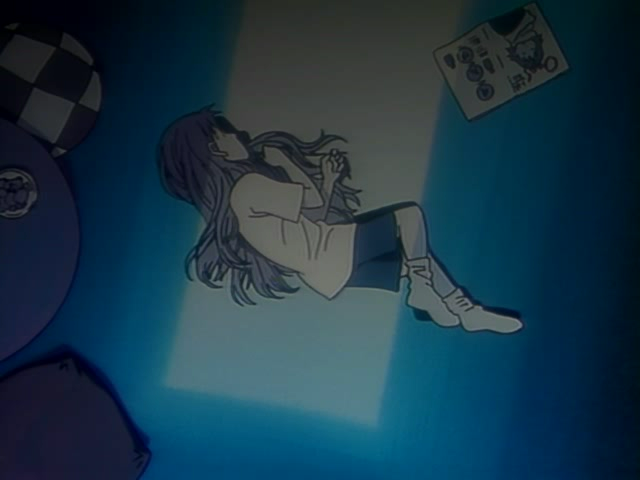
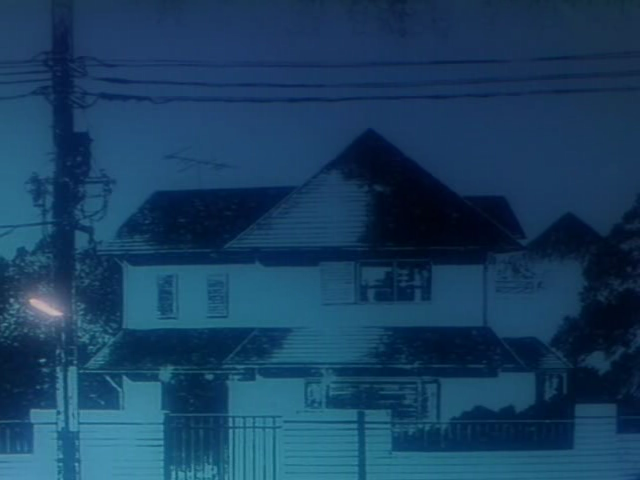
Reminiscent of the industrial imagery grating alongside Arima’s past, Tsubasa’s two-parter is inundated with filtered photos of the real imbuing her narrative with a degree of instability, drawn backgrounds reserved for more peaceful times. Characters no longer walk, cameras instead simulating motion through disjointed tracking shots; navy blue tones evocative of the emotional isolation Tsubasa finds herself in the throes of, tangled wires further alluding to interpersonal difficulties.
Coming from an affectionate family, Yukino takes all the daily pleasantries and light-hearted bickering in her stride through assuming all familial units take a similar approach to their relational dynamics. In turn
KareKano’s creative team generously lean into the Miyazawa family’s zeal through frenzied sequences and exaggerated expressions, yet from Tsubasa’s perspective their household is similarly bathed in dismal tones of the real – no longer bright and cartoonish. Crossing the threshold visibly fails to put her at ease, uncertainty so profound it reaches the audience via the house’s outside for the first time represented as this foreign space, cold and uninviting.
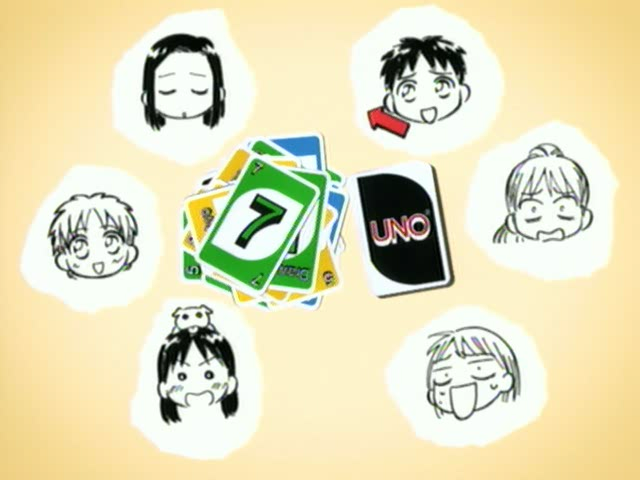
The episode’s sound direction likewise facilitates Tsubasa’s sorrow rising to a heartrending cadence as a joyous track soars alongside a game of UNO, the Miyazawa family depicted via SD. Her absence isn’t felt, the sequence cutting to yet another filtered image of a ceiling unnerving as the infamous
“another unfamiliar ceiling” goes unspoken. Distanced from the game’s warmth, Yukino’s family indulge in frivolities with laughter muffled, emitting light overwhelming. Immersed in lonely blues the episode’s title (‘Happiness’ Whereabouts’) is stifling, reminding Tsubasa of all she doesn’t have. Stability. A family that’s there for her.
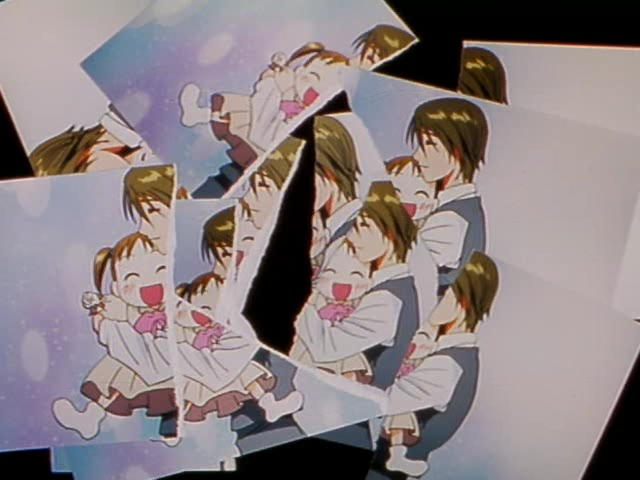
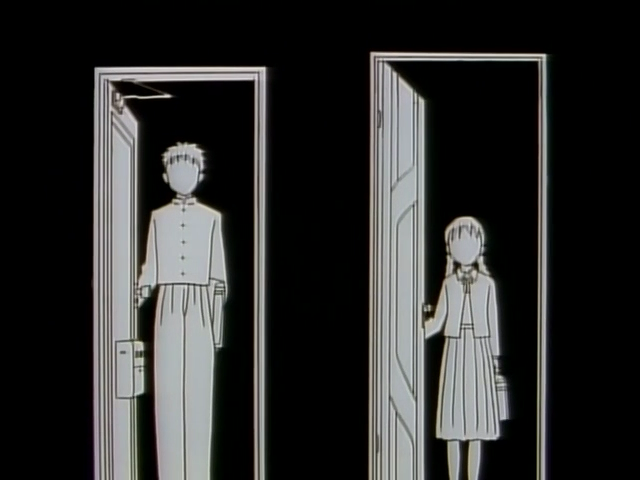
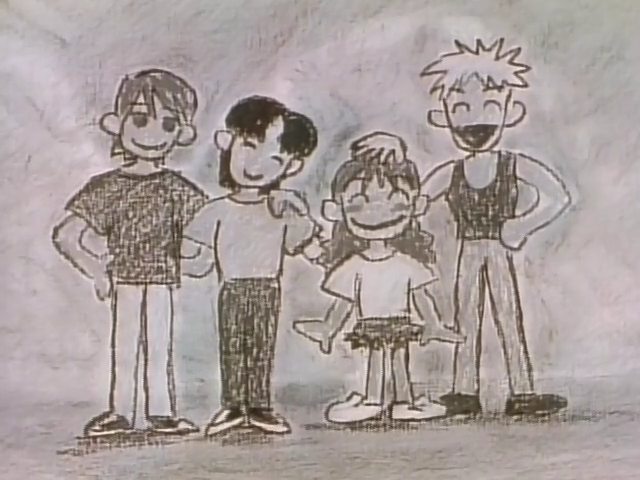
Upon returning home the cinematography emphasizes the awkward distance lingering between Tsubasa and her father, separated by a stairwell and intricately panelled sliding door, not quite in the same frame until she apologizes but even then the panelling continues to hint at uncertainty. Pangs of blissful childhood recollections hit with startling acuity, crayon illustrations a fallible idyll pointing to Tsubasa’s struggles reconciling the romanticised past with the painful present’s reality. A scribbled technicolour smile fades into blue desperation, a later illustration of her crying suggestively scrawled in the same dark tones while verbalizing her loneliness. In accordance to Tsubasa’s perception, aesthetic stability is regained once egocentric preoccupations are cast aside through empathizing with another individual – her would-be stepbrother, Kazuma.
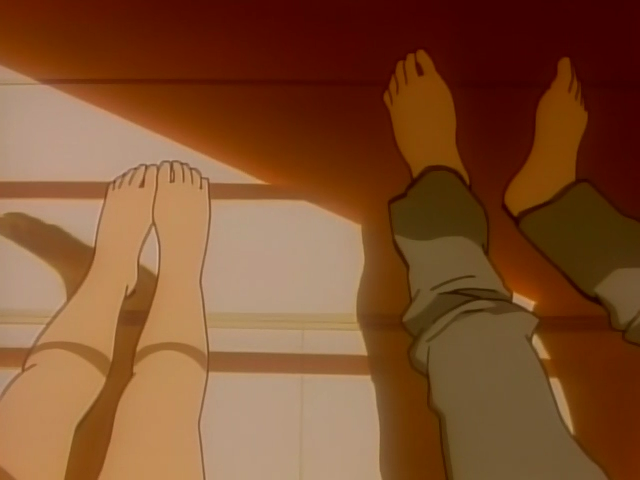
Through reaching out as opposed to internalizing stressors, she musters up the courage to work through deep-seated issues by finding a kindred spirit in all that he represents. As if responding to shared positive functioning the environment continues to change for the better, cinematography drawing attention to intimate conceits such as paired shoes in the entryway of Kazuma’s apartment, abandoned ice cream wrappers, and legs outstretched – a collection of twos. A convenience store worker calling them siblings is not fiercely rejected, the sound of children in a playground alongside a two-seater swing suggestive as the wounds of childhood isolation are slowly healed. In wanting to find a place to call home, they managed to find acceptance in each other. A gentle twilight seems so promising, warm. And it’s all orange, brilliantly so.
Tsubasa and Kazuma’s relationship built upon a reciprocal foundation of understanding proves to be a far and desperate cry from what was previously shared with Arima, what Yukino was mercilessly vilified for taking. As a result of Tsubasa’s social isolation, Sakura muses that intrinsic developmental needs have not been met, coddling on behalf of her father leading to difficulties regarding social integration and subsequent peer isolation; a form of egocentricity persisting into adolescence. That Arima recognized something of himself in Tsubasa is quite poignant, the pair gingerly stumbling through the vestiges of fraught familial situations and emotional distancing.
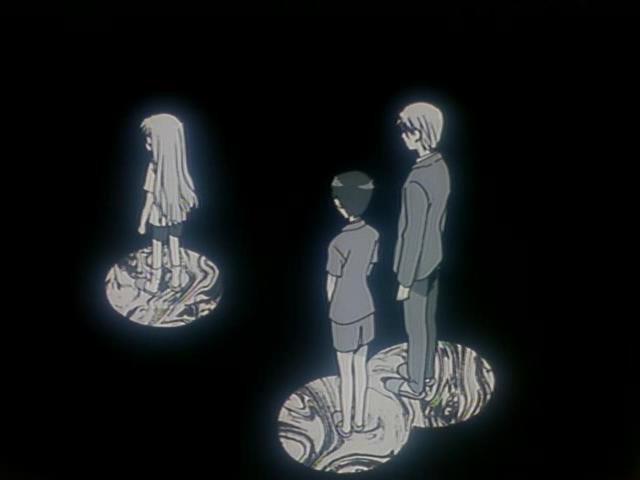
Despite the superficial perfection of their friendship, two beloved figures, Yukino notes that ‘sorrowful sentiments’ suffuse what they share. In contrast Tsubasa and Kazuma have lived through the same days, enduring the same ache when no one greets them at home; blank faces representative of emotions continuously suppressed. Through establishing a mutual connection however, Tsubasa’s world expands beyond the restrictive confines of the solitary union involving her and her father, reaching out to both Kazuma and his mother. With understanding, she is able to paint a beautiful family portrait of her very own, imbued with hopeful tones of the future instead of that persisting blue isolation, a canvas waiting to be filled.
return