* [content warning]
discussion of incest, references to suicide
*
Over the course of my time spent with anime, there have been a select number of series I giddily relish in discussing, waxing lyrical regarding their bizarre narrative proclivities, absurdist bents. That a gaudy incestuous tirade dragged howling from the medium’s rusty vaults would dare invoke Lord Byron’s ennui-driven
Childe Harold’s Pilgrimage quickly cemented itself as one such series, becoming the scourge of fandom for a time. Ostensibly
Yosuga no Sora does little to support its ambitious epithet, female characters swooning over its protagonist viewed through glistening shoujo filters, glowing and giddy.
Within minutes it seems as if every eligible lady within a twenty-mile radius falls for Haru’s affable everylead charms… Leaving twin Sora to grip onto him a little tighter, scowl deepening as each episode parades a litany of semi-explicit eroticisms. Despite its undeniably trashy conceits and lack of substance however, even after all these years
Yosuga no Sora is one of those formative pieces I still find myself mostly bemused by. As I derive genuine enjoyment from its bawdy practices, I would be reluctant to call it an exercise in ironic consumption.
As soon as
Yosuga no Sora begins, the viewer finds themselves succumbing to the soothing lure of
piano-driven pieces and sweeping pastoral landscapes, the mise-en-scène surreptitiously alluding to romanticism in all its grandeur with a retreat to the country; the city and death cast aside. In line with romanticism’s wistful ethos, the lush bucolic quality of the countryside proved to be an appealing quality for a host of eighteenth-century literary figures, many of who abandoned the grime and dreary greys of modernity for a landscape seemingly brimming with imagination and possibilities. A sanctuary, teeming with soothing prospects that can heal one’s heart.
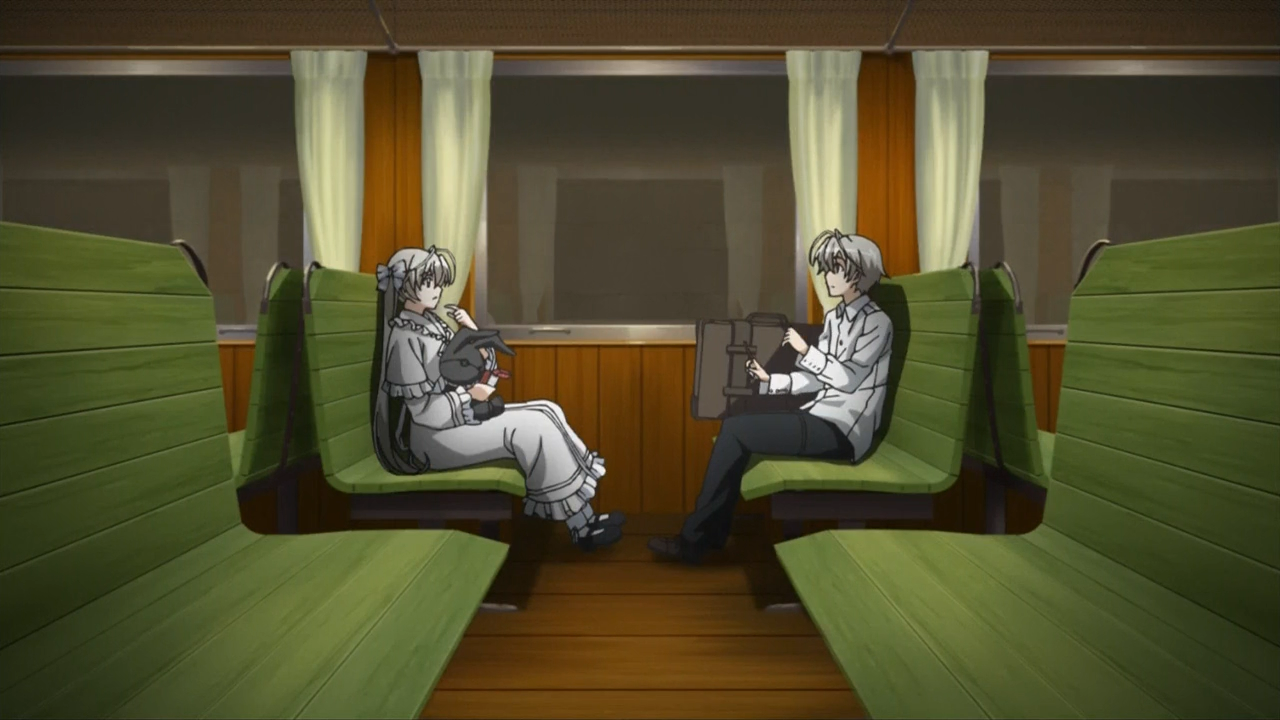
Within a train void of other passengers, in
Yosuga no Sora the twins’ journey home takes on markedly illusory connotations; wispy reveries fading away into clouds overhead, blue of the sky otherworldly. Despite Sora and Haru being very much in the midst of “solitude”, nature itself almost becomes a character of equal importance, this threatening constant lurking behind each awkward interaction, averted gaze. While many viewed the country as an idyllic haven, others viewed it as cold and uncaring, beyond the limits of human comprehension. As opposed to a space where one could successfully escape from the everyday, it was garish and claustrophobic – a sentiment which echoes throughout the stanza of
Childe Harold’s Pilgrimage which
Yosuga no Sora’s epithet “in solitude, where we are least alone” has been lifted from. Nature is distant, an all-consuming reminder.
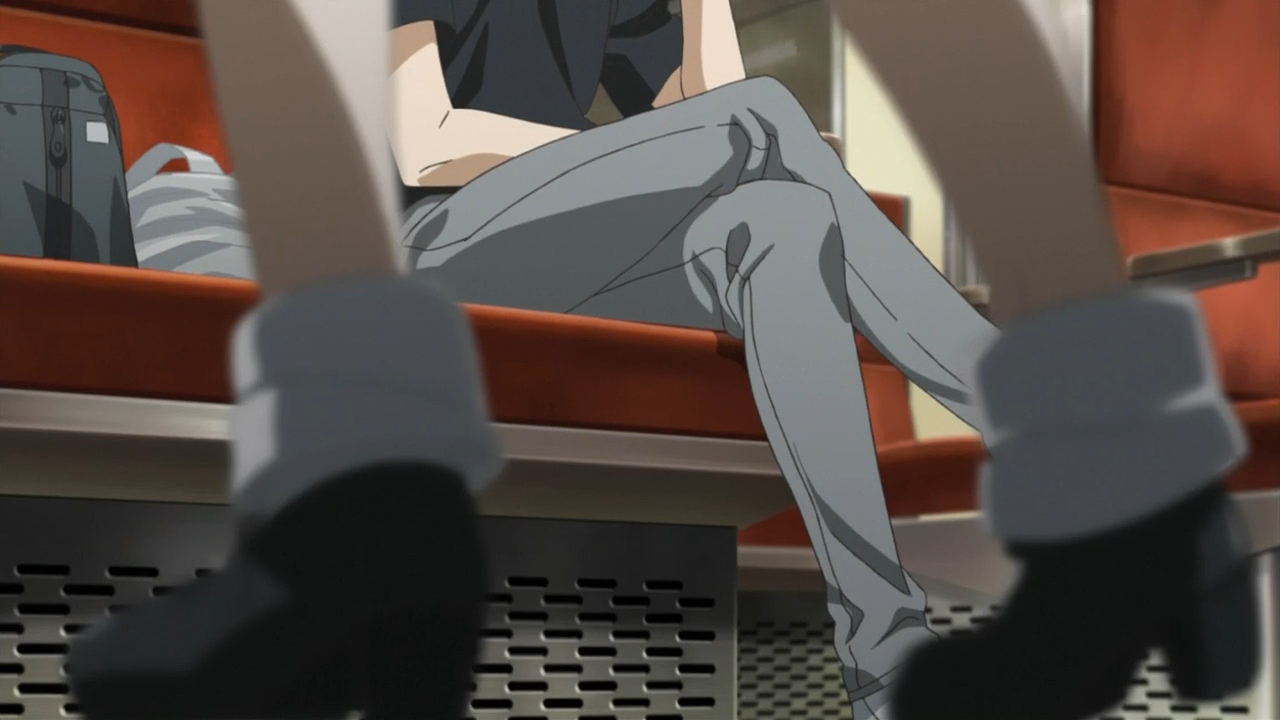
With that in mind it isn’t long before all pretense of fragile tranquility is dispelled through a rather suggestive frame depicting Haru between Sora’s legs. Reminiscent of The Graduate’s iconic “Mrs. Robinson, you’re trying to seduce me” scene, a shot of its manner generally evokes sexual intent and notions of power balance. Sora further forcefully biting down on a stick of Pocky hurriedly grabbed further belies her intentions, imbuing what ought to have been a gentle introduction with an element of the uncanny, much like the countryside. Titillating sequences appearing within an anime toying with incestuous fancies is practically a given yet here it quickly proves to be jarring, at odds with the established stillness.
As is so often the case with
Childe Harold’s Pilgrimage, within
Yosuga no Sora nature emblematizes the uncanny. A far cry from
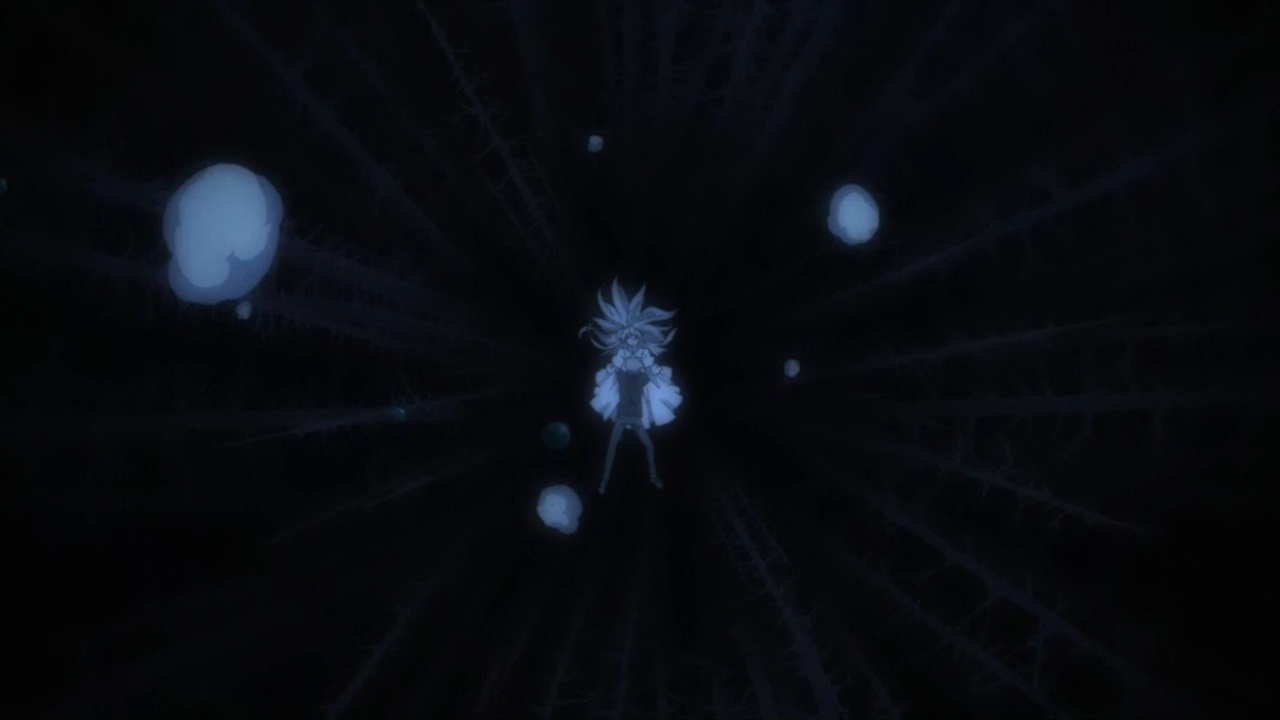
the sunlit garden tucked away in the midst of a pastoral haven where nascent affections thrive, it is a desolate realm opposed to Sora and Haru’s union, a grave reminder seeping into their everyday. In particular water imagery evokes the nebulous nadirs which threaten to consume, suggestively permeating both credit sequences. In the opening waves immerse Sora in comforting recollections past, alluding to later developments with her and Haru rising up from a watery grave.
Even with the
closing’s distinctly lighthearted bent its female cast wade through a deluge of water-related settings including baths, a swimming pool, and the beach; drenched clothing on display. Neighbour Nao’s solemn ruminations are likewise tied to water, grappling with the strife of her father’s adultery while bathing, an incident which leads to sexual assault. An idle conversation over shared drinks leads to her and Haru almost kissing, Sora livid for she happened to witness what occurred all those years ago. Suspecting that the nature of the siblings’ relationship has shifted once she sees them sharing an umbrella, Sora clinging onto Haru’s arm all the while.
For years incestuous romantic-comedies have flourished amidst the murky annals of the industry, fandom scrunching up its collective nose every time yet another one has the audacity to appear on a seasonal chart. And yet
Yosuga no Sora differs due to its distinctly unnerving connotations, all ersatz relational dynamics stretched thin. Sister sullen and yearning, brother oblivious and staving off the inevitable clawing into his back. That the show featured a between-the-legs shot to contextualize their relationship is by no means a coincidence, the sense that something isn’t quite right evident from the beginning. Sora momentarily deludes herself into imagining that Haru is leaning in for a kiss, yet in reality he gently chides her, all affectionate head-pats.
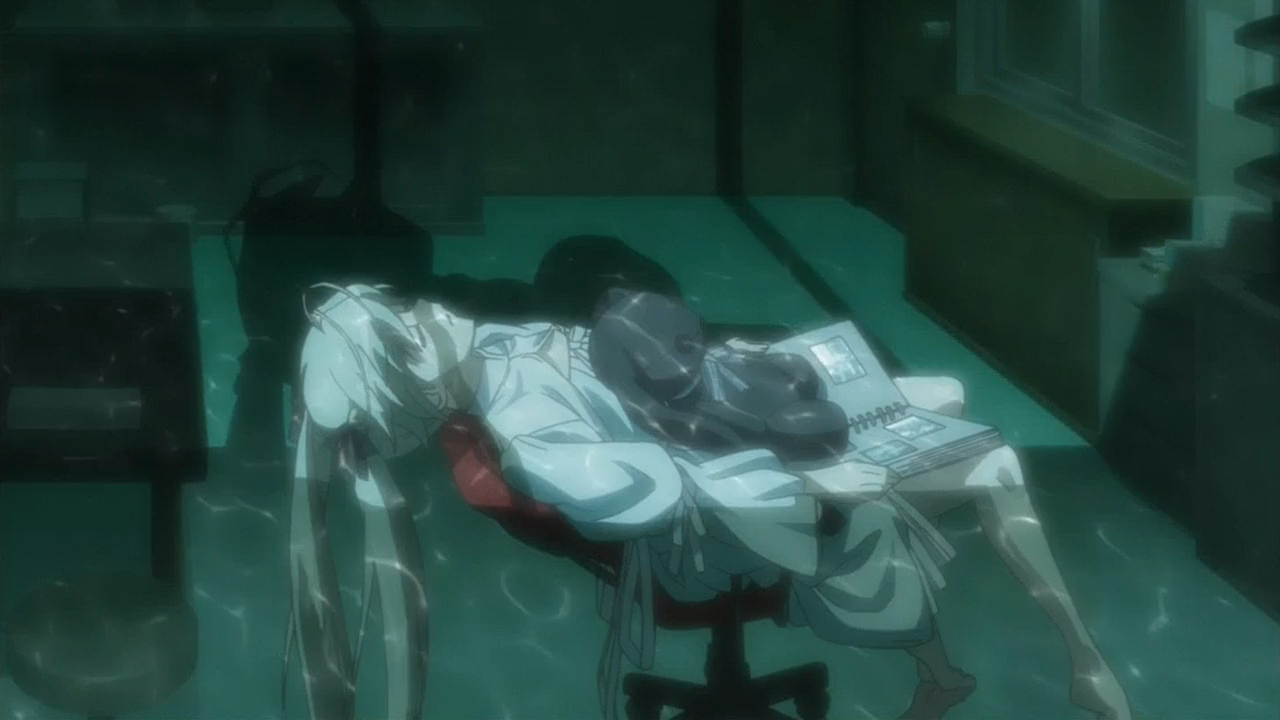
As if in response to such a grave transgression however a storm beckons, casting the village into darkness. Portentous rivulets trail down the windows of their home, trapping them. Of the room where they first kissed as children. The kitchen, where it’s only the two of them now that their parents have passed on. Haru’s bedroom, where Sora is undressing, face obscured and illuminated by the thunder. Drawn into the eye of the storm with nature a deafening constant, what appears to be an illusory fugue is stifling through cinematography emphasizing bare legs, words stammered, cheeks flushed. Cut to the first comparatively tame
closing sequence in which a reel of childhood memories is called into question, eroticisms of the present tearing each photo apart.
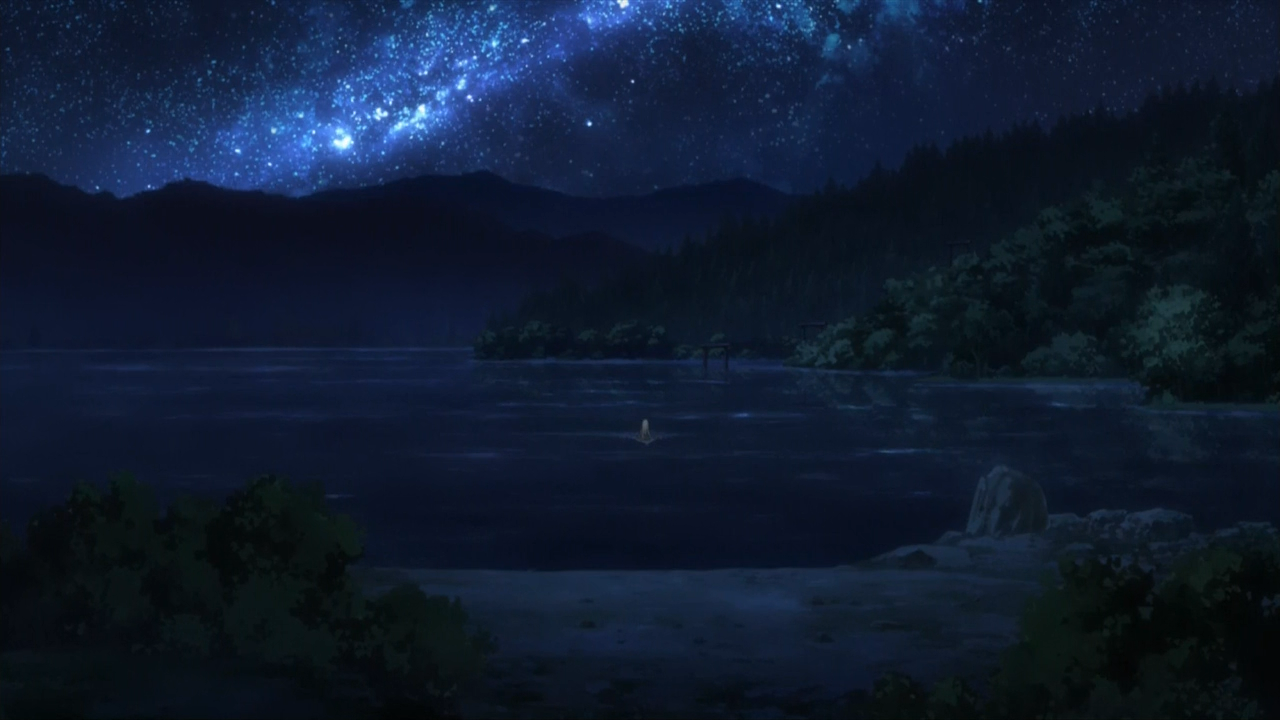
An inevitable schism arises as pressures ooze into their everyday, nature cruel and encompassing. With Sora and Haru no longer residing within the soothing sunlit garden of their own imagining, the countryside instead proves to be a barren space where their love cannot flourish; pastoral mise-en-scène of dreamy clouds strewn amidst the twilight and lush greenery cold and distant. It doesn’t accept, doesn’t offer a safe haven free of judgement. What dispels romanticism’s shallow embrace alongside idyllic notions is the lake tied to the local shrine, a historical landmark. Supposedly the place where everything began, shrine maiden Akira claims that it predates the island of Onogoro for having spawned humanity (Onogoro itself drawing from both
Kojiki and
Nihongi texts, in which sibling-spouses Izanagi and Izanami created Japan). Water conjures up notions of release and catharsis, rebirth amidst amniotic fluid, amplifying the 物の哀れ ethos evocative of life’s, existence’s impermanence. The lake serves as the final bastion which Sora and Haru attempt to desecrate through at last taking a stand against nature and all its formidable conceits threatening to strike them down. An oppressive realm where even in the midst of “solitude”, they are “least alone”.
The odds are by no means in Sora and Haru’s favour, and at the time of the finale’s airing a prevalent theory involved the siblings sinking to their watery grave. Double suicide proved to be an expected ending for incestuous unions, to the degree that the first documented instance of the act involved siblings in the
fifth century
Wilson, H. (2003). Where the Trees Grow Thick: A Search for the Yamato Spirit. New York: iUniverse.
. With class representative Kozue serving as a mouthpiece for society’s collective condemnation their relationship cannot possibly thrive, a motion sustained by Haru as they sink to societal nadirs, cut off from civilisation.
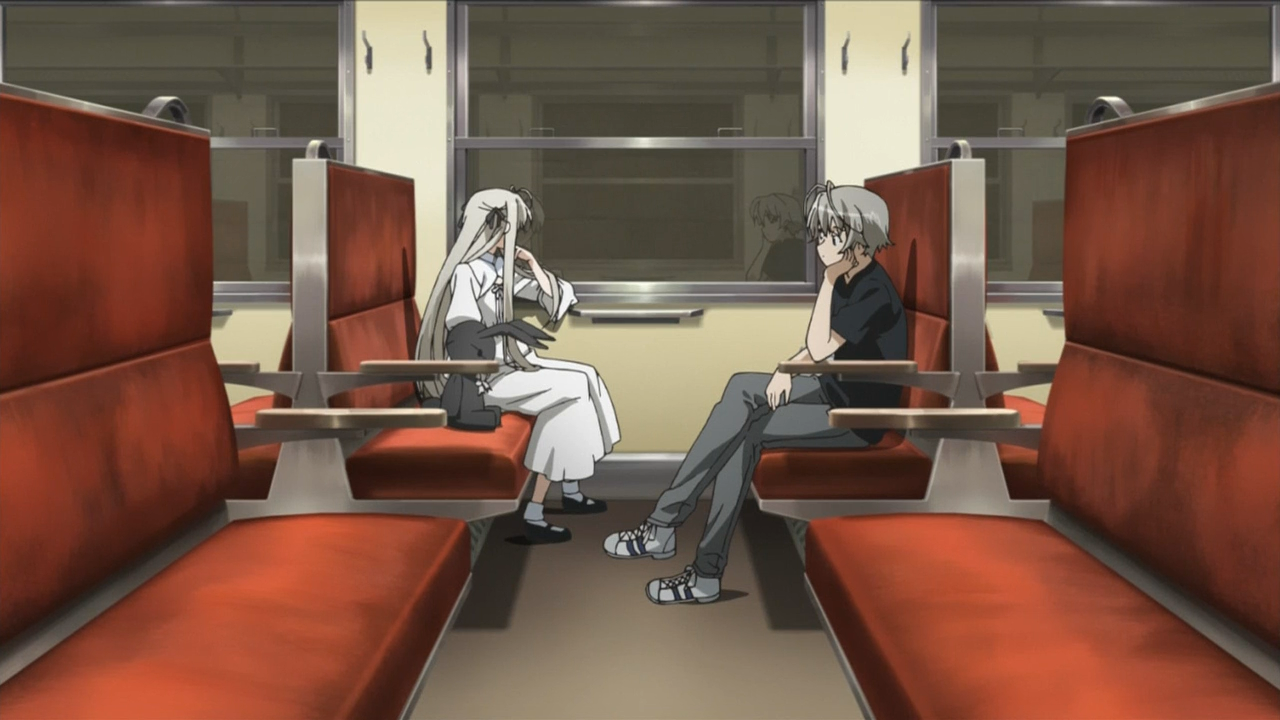
That Nao proves to be the figure who comes to their rescue however is in itself suggestive for she taught Haru how to swim, an act reflected by her being the only figure that accepts their relationship for she essentially taught him to defy the elements. The anime’s final sequence is a bookend which echoes back to its introduction, depicting the twins on a train; their destination unknown for they shuffled off nature’s shackles, rose beyond all that threatened to consume them. Instead of the stifling physical distance, sexually-charged imagery they are portrayed as equals sitting across from even other.
A solitude of Sora and Haru’s own, where they are very much alone, is at last achieved.
return