Spinning with the Stars Above:
Beyond ‘Bury Your Gays’ with Yuri Kuma Arashi
and San Junipero
That San Junipero would rise from the paranoid hotbed of technological instability that is Black Mirror, that Yuri Kuma Arashi would from the ashes of disingenuously cloying S constraints results in a fierce and resounding call for inclusivity dousing the flames of conditional sentiments often inextricably tied to queer narratives. In the rare instances where such relationships are portrayed sans restraint they often end in tragedy, commercialized for entertainment purposes loaded with insidious queerness as crime implications. It seems to suggest they are doomed to succumb to stagnancy, gaudily contrasted against heterosexual counterparts riding off into the sunset, their happiness assured.

Few series care to explore what occurs to those left behind following the sacrificial baton toss to more socially acceptable counterparts, narrative dregs having fulfilled their role only to be left plummeting down to the nebulous nadirs of network television constraints. Inclusivity is rarely considered with such ruinous tenets instead serving as dramatic impetuses to drive the broader narrative forward, queerness arguably ending before it can even begin as writers lapse into sensationalist portrayals. These characters serve a specific function in adhering to such treacherous staples, gaudy entertainment as opposed to critical representative icons.
This in turn inevitably has a grave impact on those who would possibly identify with such characters, particularly at a malleable age which is certainly cause for concern this year, and every year – we can do better, these stories are worthy of depiction rendering fandom’s prolonged campaigning frustrating. We should by all accounts have long since left such incendiary stories behind back with the first televised lesbian to be run over by a truck chasing her love interest. San Junipero and Yuri Kuma Arashi instead serve as crucial milestones which aggressively strive to defy such lazily repugnant strictures, with their unabashedly queer couples intentionally transcending the notion of death itself through walking off into a glittering future beyond traditionalist narrative confines, beyond ‘Bury your Gays’.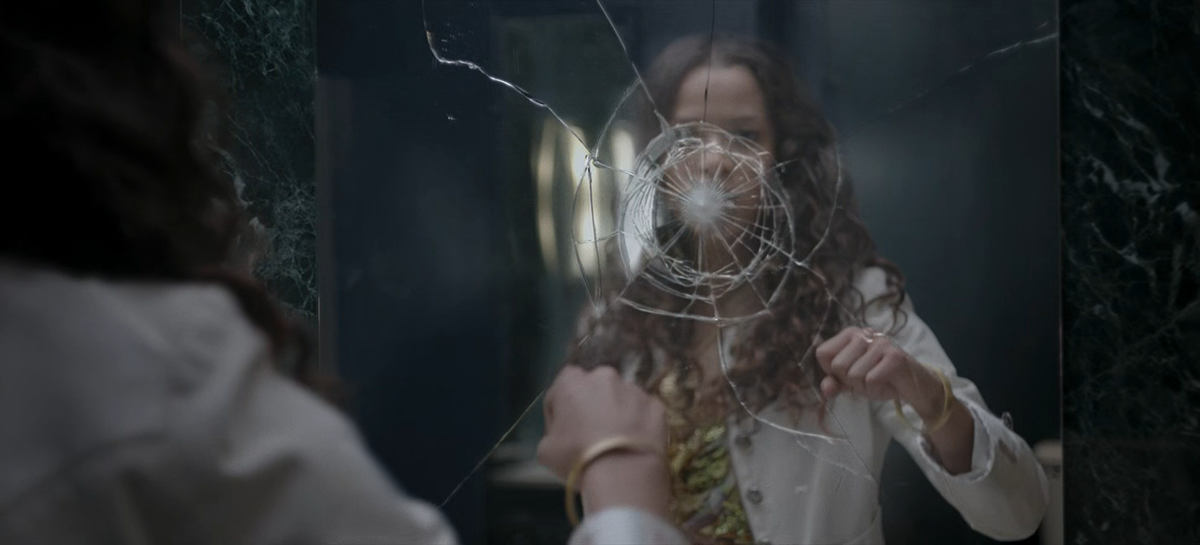
Although Black Mirror has gained notoriety for its unrepentantly bleak view of humanity’s relationship with technology, the Emmy-nominated San Junipero positively offers its characters a new lease of life beyond the narrow confines of mortality. Transforming ‘heaven’ into ‘a place on earth’, the synths of Belinda Carlisle’s classic orchestrate a dazzling boisterous display of love as Kelly and Yorkie indulge in each other’s company, eternity within their shared grasp. They are able to joyously transcend the narrative shackles weighing heavy on all of which their existence suggests, unabashed elation beautiful in light of all the queer characters cast aside to death and perpetually silenced in its margins. Death is by no means an ending, but a beginning glittering in the depths of a starry seaside party town.
“It’s got different endings, depending on if you’re in one or two player.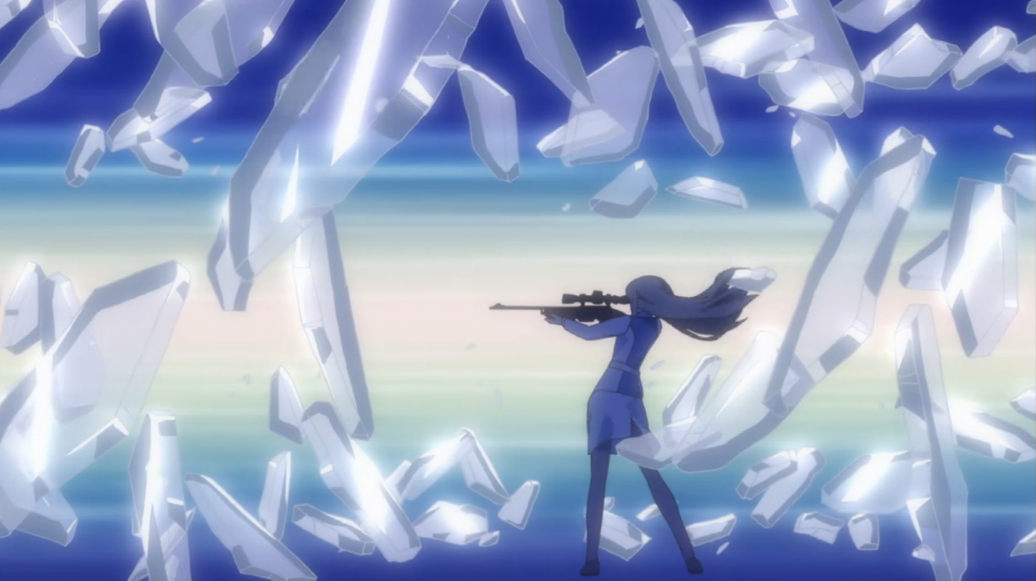
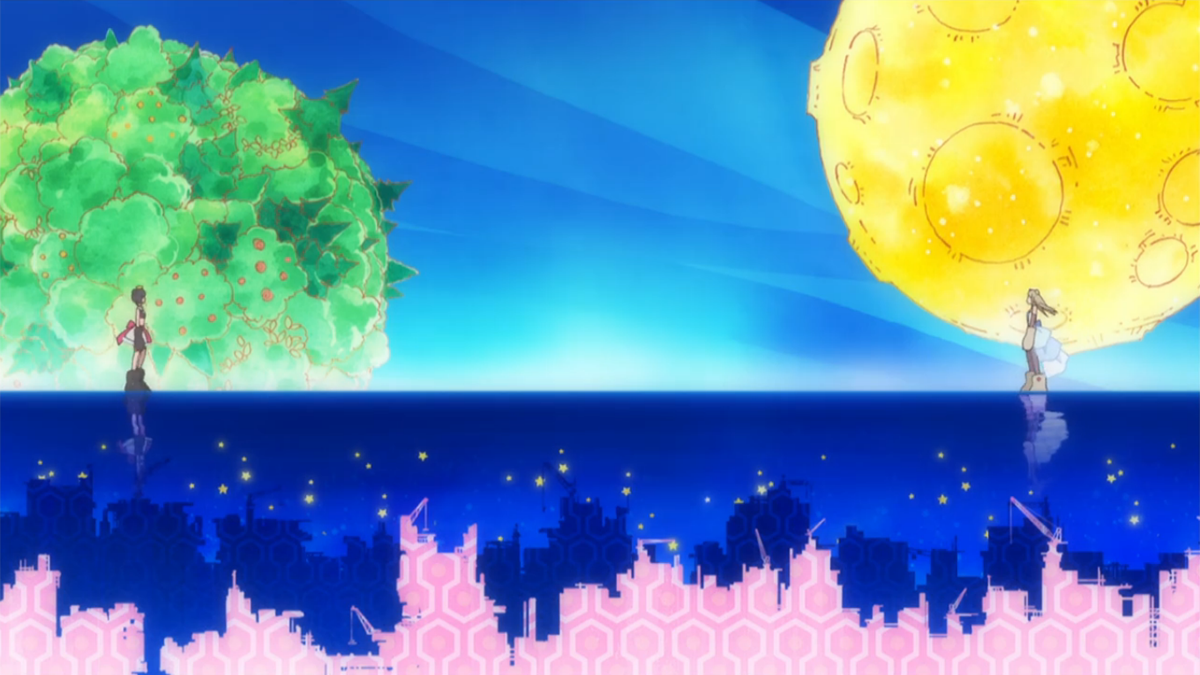
Yuri Kuma Arashi occupies a similarly transgressive space of medium liminality, serving as a scathing treatise of explicit othering and oppressive orders which condemn the marginalized. Its existence lives in raging defiance of a black lily laser aimed at Ginko teetering on the precipice of social annihilation, of demure exchanges strewn amidst a pristine garden forbidding lilies from ever flourishing, of stifling sexuality. Its central characters alongside the show itself dare to defy the sanctity of yuri’s history through openly performing queerness, shattering a medium built upon tenuous staples, breathless ‘but we’re both girls’. In order to assimilate and retreat into the welcome arms of nonthreatening invisibility Kureha is essentially required to kill off her queerness embodied as Ginko, yet instead severs off illusory pretences through an unabashed visible display of queerness even in the midst of gunshot and chants calling for exclusion drowning her out. Following in Yorkie and Kelly’s wake, Ginko and Kureha walk off into a glittering future through ascending an iridescent Jacob’s Ladder to join Kumaria, transcending severance. Resisting the restrictive shackles of vitriolic mobs curbing desires, lapsing into ostracism.
In Yuri Kuma Arashi’s wake such a (deceptively) traditionalist ending once again resorting to expected crime as queerness connotations understandably drew criticism; disillusionment unavoidable as Uchiko witnessed Ginko and Kureha’s ascension, religious imagery suggestive with the ill-fated pair at last being together in death. However given all the subversive conceits the show champions a depressingly reductive retreat at the eleventh hour would be questionable, instead inviting the uninitiated to take a closer look at director Ikuhara Kunihiko’s oeuvre.
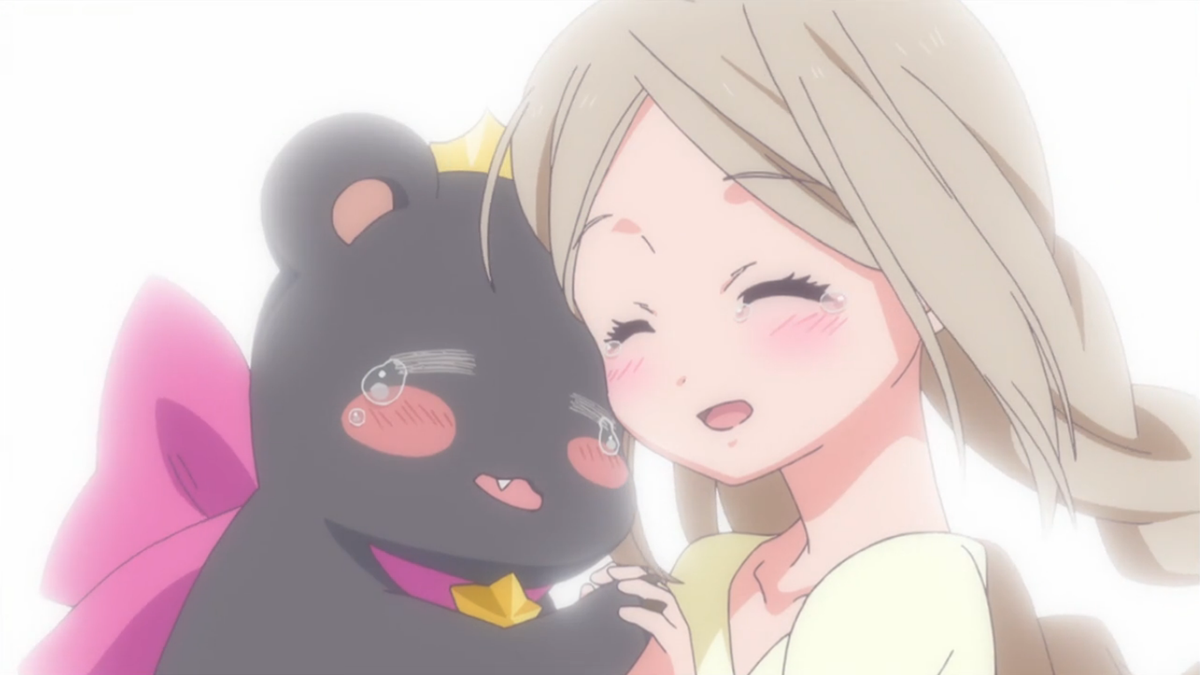
When progressive epoch-defining pieces appear they generally pave the way for similarly resolute offerings, the combined efforts of San Junipero and Yuri Kuma Arashi serving as examples upon which their respective mediums ought to follow through normalized portrayals of queer relationships able to thrive without succumbing to ‘Bury your Gays’. As Uchiko gazed at Ginko and Kureha’s ascension in awe, countless other creative minds may have felt something within them stir. As subtext and insidious queerness as crime implications fade, the notion that such relationships are valid and worthy of depiction strengthen for they don’t have to end in death, especially when death itself can even be a beginning.