If I Could Only See You,
from Hope Eternity Would Be Born:
Beginnings in Yuri on Ice and Welcome to the Ballroom
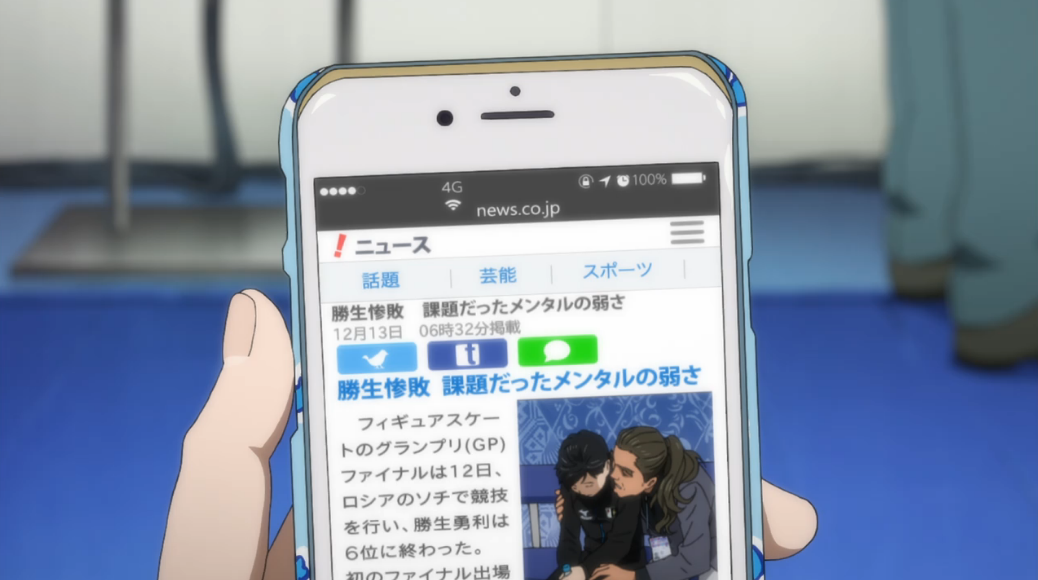
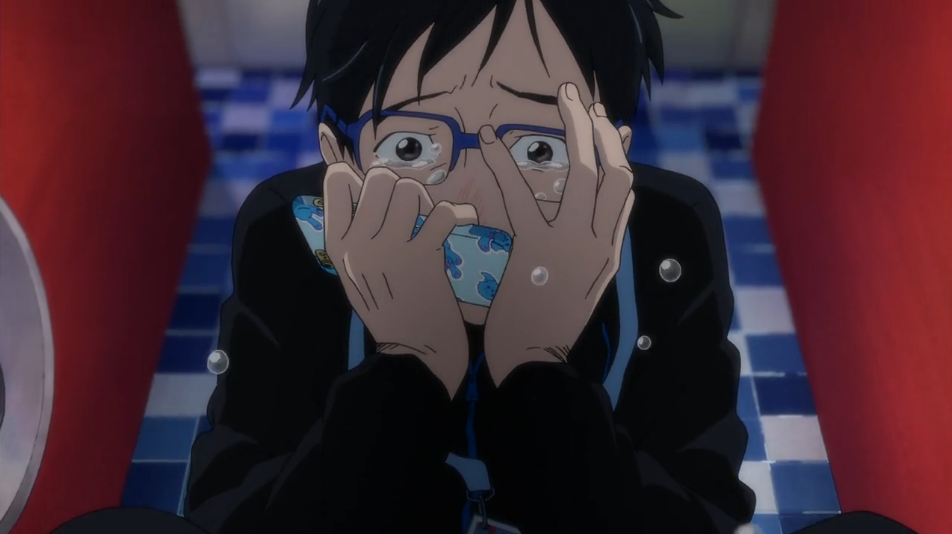
Through coded familiarities it is expected that Tatara will soon find solace in ballroom dancing, an obvious beginning in sharp contrast to what appears to be Yuuri’s ending. He succumbs to the seductive allure of social media and news outlets pouring venom in his ear, publicly lambasting failures on display for the entire world to see. He apologises to his mother in a cramped bathroom cubicle, lapsing into regional dialect with sobs on the verge of escaping. He pointedly ignores those with his best interests at heart, dissociating as he drifts off into another world. He binge-eats, impacting his figure which likewise restricts his skating ability. He displays reluctance indulging in the kindness of his townspeople and fans that gaze at him starry-eyed. Notoriously petty and possessive, passive-aggressive to a point, Katsuki Yuuri quickly proves to be a character as odd as the show he inhabits.
Despite taking his first steps onto the dancefloor Tatara is a prodigy, presented as this savant able to masterfully imitate amateur champions. Mentor Sengoku states he has no idea what it takes to successfully compete yet physical fluency is achieved within hours, exertions resulting in a ludicrous gamut of narrative insistence as characters slip on a sweat-drenched floor; blister-covered feet and broken shoes soon following. It’s a far and harrowing cry from Yuuri shouldering over a decade’s worth of labours resulting in international failure, snubbed by his beloved idol placed high upon a pedestal. While being twenty-three wouldn’t be considered an issue in most sports-related professions, ice skating generally skews younger in terms of demographics due to the increasing likelihood of injury as one ages due to intricately choreographed movements pushing the human physique to its absolute limit.
Youth proves to be a distinct advantage rendering Yuuri among the oldest competitors in the show, shown sharing a bench with teenagers during a Japanese championship. Unlike the vast majority of sports-related shows that systematically guide the protagonist (along with the viewer) step by step into its related field, the audience is by no means privy to Yuuri’s tempestuous journey spurred on by admiration, instead lost in the annals of his anxiety as a clamorous brouhaha echoes around the stadium for Victor’s victory – a crushing defeat, a wretched ending with a curtain drawn over his career.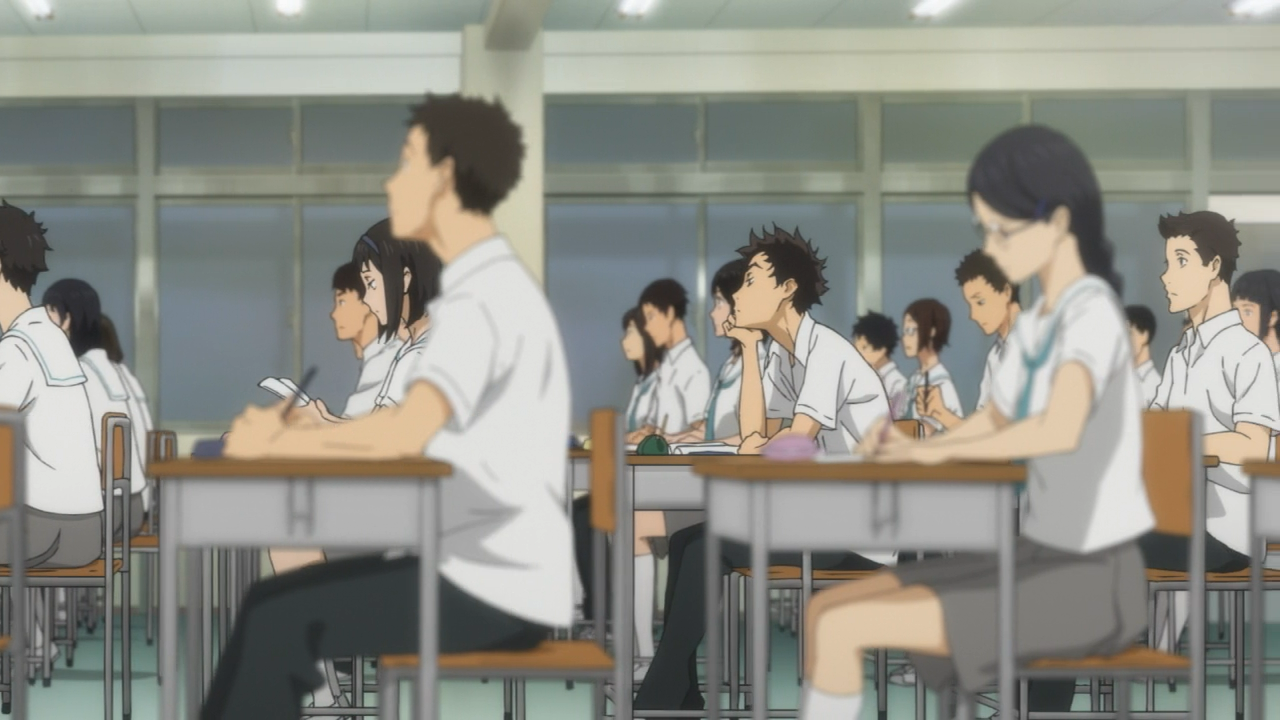
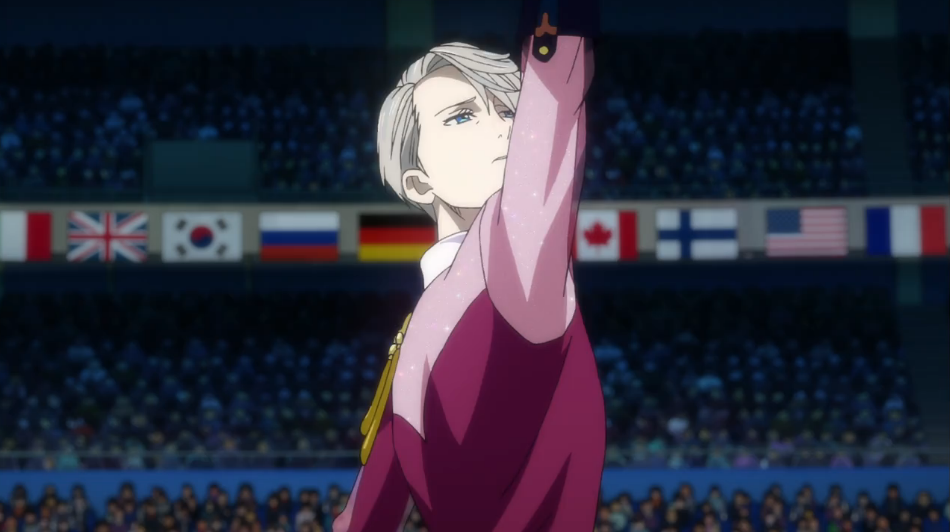
Victor Nikiforov is the icy sovereign governing over skating’s gleaming expanse; legion of subjects swooning wherever he turns, among the world’s most eligible bachelors due to his penchant for astonishing audiences. With the world at his feet and on the verge of winning yet another competition however, he has grown hopelessly bored, unable to flourish beyond skating’s increasingly narrow confines. It’s all been done before, countless medals and trophies doing little to reassure. Although Yuuri is acknowledged as one of the profession’s oldest competitors, at twenty-seven Victor creeps ever-closer to retirement age with the likelihood of potential injury cause for alarm, the next season being his final one seemingly inevitable. Following his win at the same Grand Prix Finals Yuuri spectacularly lost, when questioned by a reporter regarding what comes next he doesn’t stir, expression void of interest. Immersed in the twilight of his career skating has long since lost its arresting shimmer; the equivalent of spending your life with sights eagerly trained on a particular field, only to enter it and through the blusterous tedium forget why you were so pushed on it to begin with. The dream fades leaving Just a Job, burnout settling in. You’re trapped, swept away in the uncertainty of an ennui-fuelled haze.

That Welcome to the Ballroom would open with a teenager’s future prospects serves as a suggestively poignant contrast, Tatara searching for a dream where Yuuri and Victor have long since been swept away into an endless night of uncertainty; careers at a standstill. What could possibly be left, at this professional dead end…? Neither getting any younger, bereft of that which fuels them. Enter Yuuri in his intoxicated exuberance, dying the grey suffusing Victor’s existence in the most vivid of hues. He manages to shake up an otherwise dull and officious banquet, drawing Victor’s attention through outrageous dance battles and pole-dancing skills, enthralled by this bodily instrument’s performance. Yuuri is a novelty able to capture Victor’s attention and heart, a breath of fresh air blasting away that haze, and it’s enough for him to drop everything at a moment’s notice to fly across the world and be his coach.
Victor’s life has been spent on a people-pleasing quest in search of inspiration, yet casting aside all that enables him to be selfish for what appears to be the very first time, focusing on what the man as opposed to the international icon desires. So strong is Victor’s conviction that he cares little about public opinion despite being criticized at every turn, Yuuri in turn taking delight in having stolen his idol away from the world. In a rare reflective moment, Victor later mentions that prior to meeting Yuuri he had always neglected “the two L words – life and love”. Through the pair’s fateful meeting however, they are able to at last find a glimmer of hope in that all-consuming void. What comes after that dead end, life and love opening up a dazzling new world.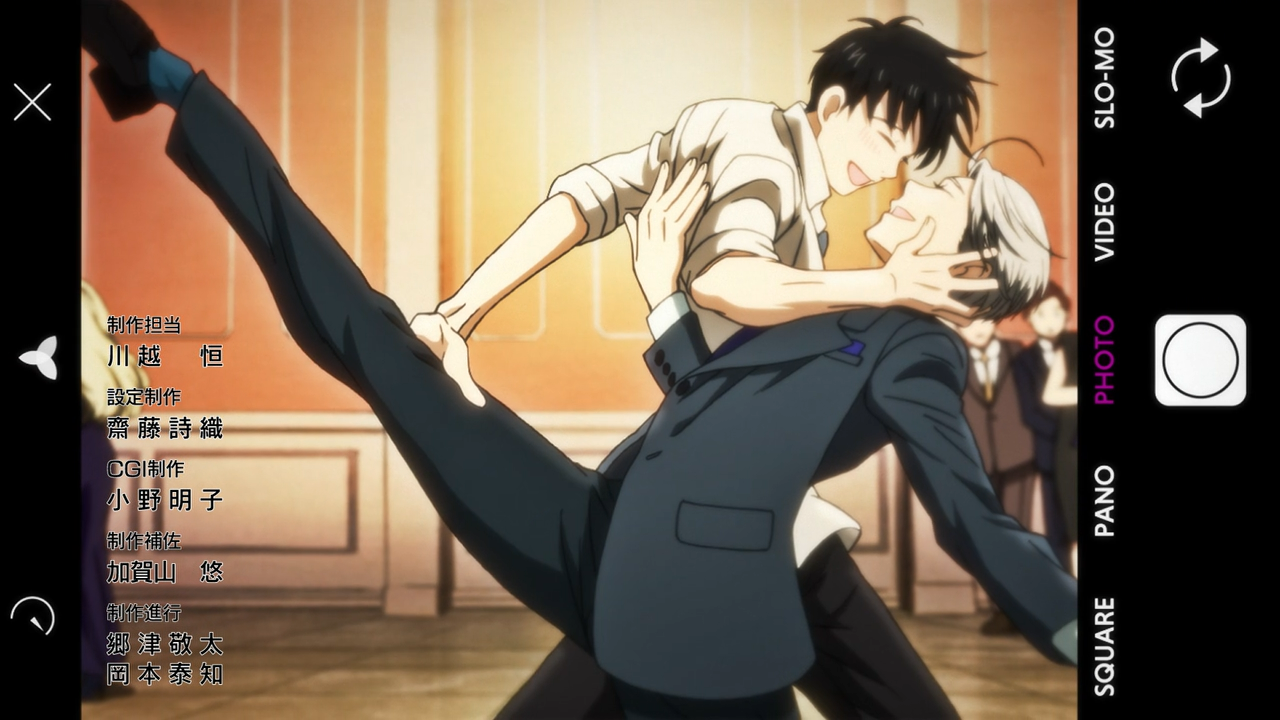

Tatara’s considerably juvenile conceits run an anticipated salacious gamut as as he internally muses about not having touched a girl’s hand since primary school, walking in on a girl changing and (of course) getting ceremoniously booted out, the sport’s sales pitch initially relying on him being able to touch a girl’s body, partner-to-be disapprovingly asking if he’s a pervert. It’s nowhere near as compelling, the glitz and glamour of ballroom dancing unconvincing as this everylead is mechanically guided through steps we’ve all seen countless times before.
In startling contrast Yuri on Ice is “the story of a character who has already matured and is taking on their final skating season, not some story about a character who is just getting started”. It’s an entirely different beginning through Yuri and Victor finding a reason to transcend the wall which hinders their development, as opposed to Tatara picking up the first brick to erect a wall of his very own.